TL;DR
Yes. COVID-19 significantly increased Will-writing activity in Canada. A LegalWills.ca survey of customers found that 39% cited the pandemic as a direct motivator for preparing their Will. The pandemic prompted younger Canadians (25–44) and single individuals to take estate planning seriously for the first time. Key motivations included confronting mortality, protecting family members, and recognizing that estate planning had been postponed too long.
Originally published: March 17, 2021 | Last updated: October 8, 2025
COVID-19 was a turning point for estate planning in Canada. LegalWills.ca conducted a survey of customers who wrote their Will during 2020 and early 2021 and found that 39% identified the pandemic as a direct reason for finally preparing their Will. The data reveals significant shifts in who is writing Wills, why they are doing it, and what they are including in their estate plans.

Why Do People Usually Write Their Will?
Before examining the COVID effect, it is important to understand the typical motivations for Will preparation. Historically, the most common triggers for writing a Will in Canada include:
- Major life events: Marriage, the birth of a child, buying a home, or retirement
- Health concerns: A new diagnosis, surgery, or hospitalization
- Age milestones: Turning 40, 50, or 65 often prompts estate planning
- Family pressure: A spouse, parent, or financial advisor recommends it
- Death of a loved one: Witnessing the consequences of dying without a Will motivates action
Despite these triggers, roughly 51% of Canadian adults still do not have a Will. The most commonly cited reasons are procrastination, perceived cost, and the assumption that estate planning is only for older or wealthy individuals.
What Did the LegalWills.ca Survey Reveal?
LegalWills.ca surveyed customers who created their Will during the pandemic period. The results provide a detailed picture of how COVID-19 changed estate planning behaviour in Canada.
Age distribution of Will writers
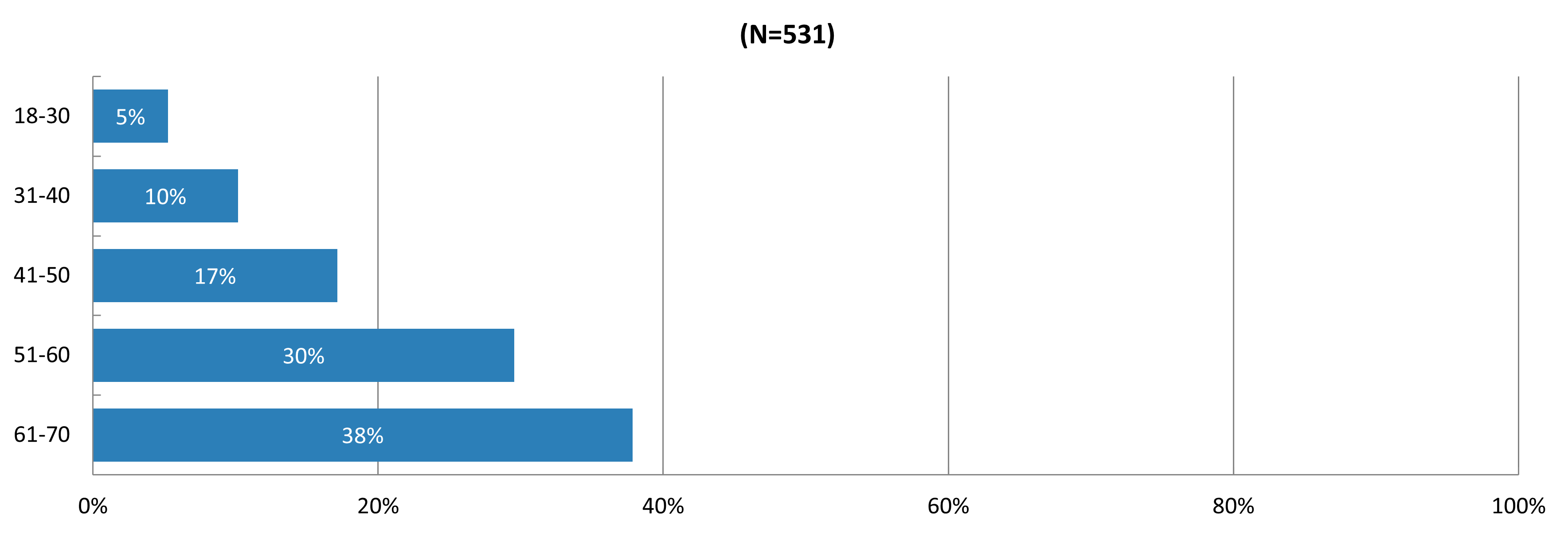
The survey revealed a notable increase in younger Will writers. The 25–44 age group, which historically accounts for a small percentage of Will preparations, showed significant growth during the pandemic. This demographic was confronting mortality, many for the first time, due to pandemic-related anxiety, workplace exposure risks, and news coverage of otherwise healthy individuals being hospitalized.
Marital status of Will writers
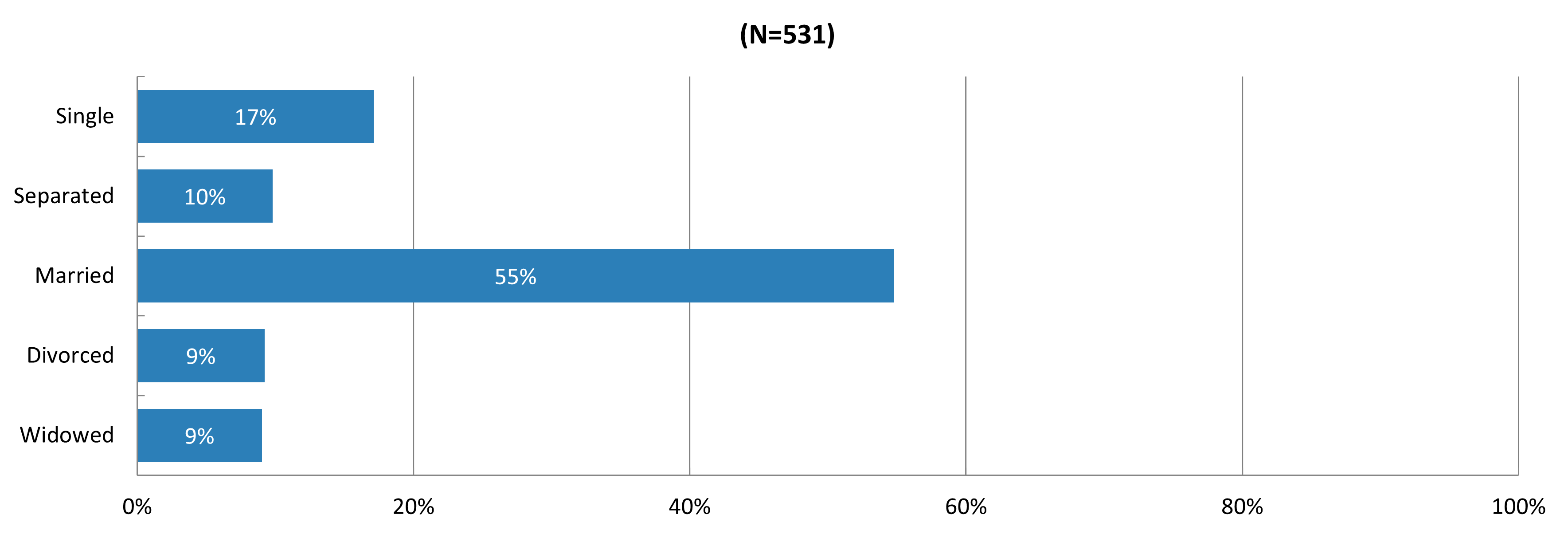
Single individuals represented a larger-than-usual proportion of pandemic-era Will writers. Traditionally, marriage and children are the primary motivators for Will preparation. The pandemic changed this dynamic; single individuals recognized that without a Will, intestacy laws would determine who inherits their assets and who manages their estate, which may not align with their wishes.
Impact of COVID on the decision to write a Will
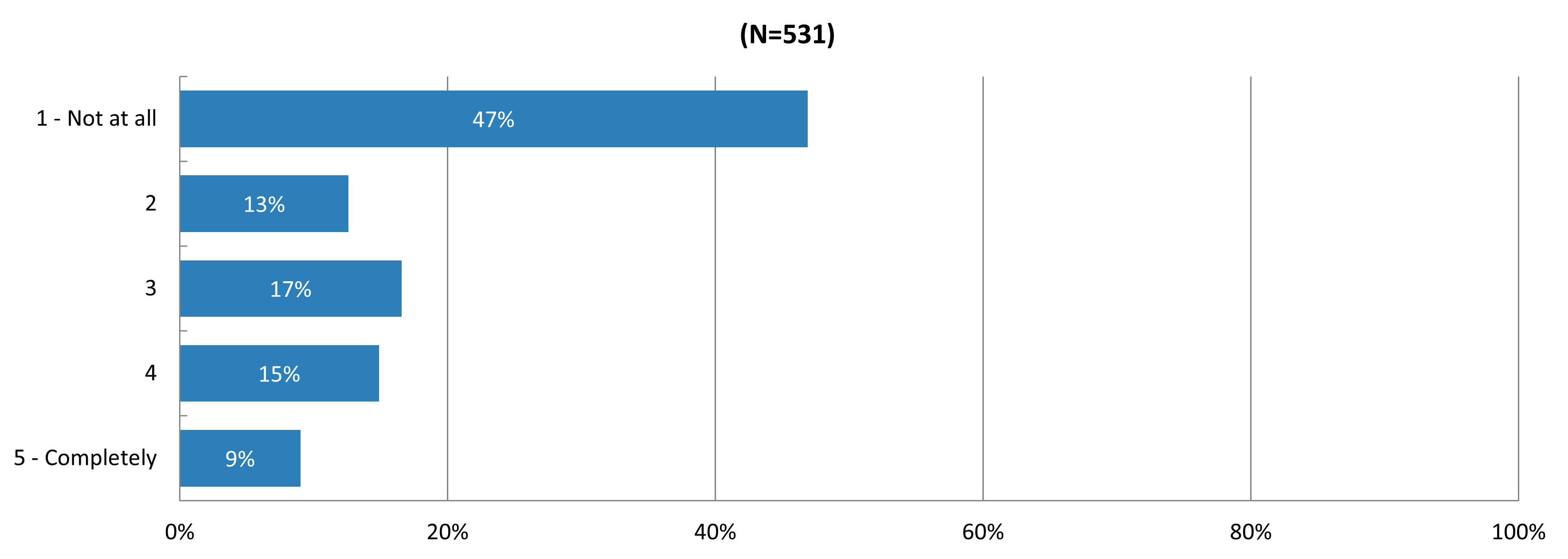
When asked directly whether COVID-19 influenced their decision to write a Will, 39% of respondents said yes. This is a remarkable figure, it means that more than one in three people who wrote a Will during this period did so specifically because of the pandemic. The remaining 61% cited traditional motivations (life events, age, health), though many acknowledged that the pandemic added urgency to an existing intention.
What Were the Top Reasons for Writing a Will During the Pandemic?
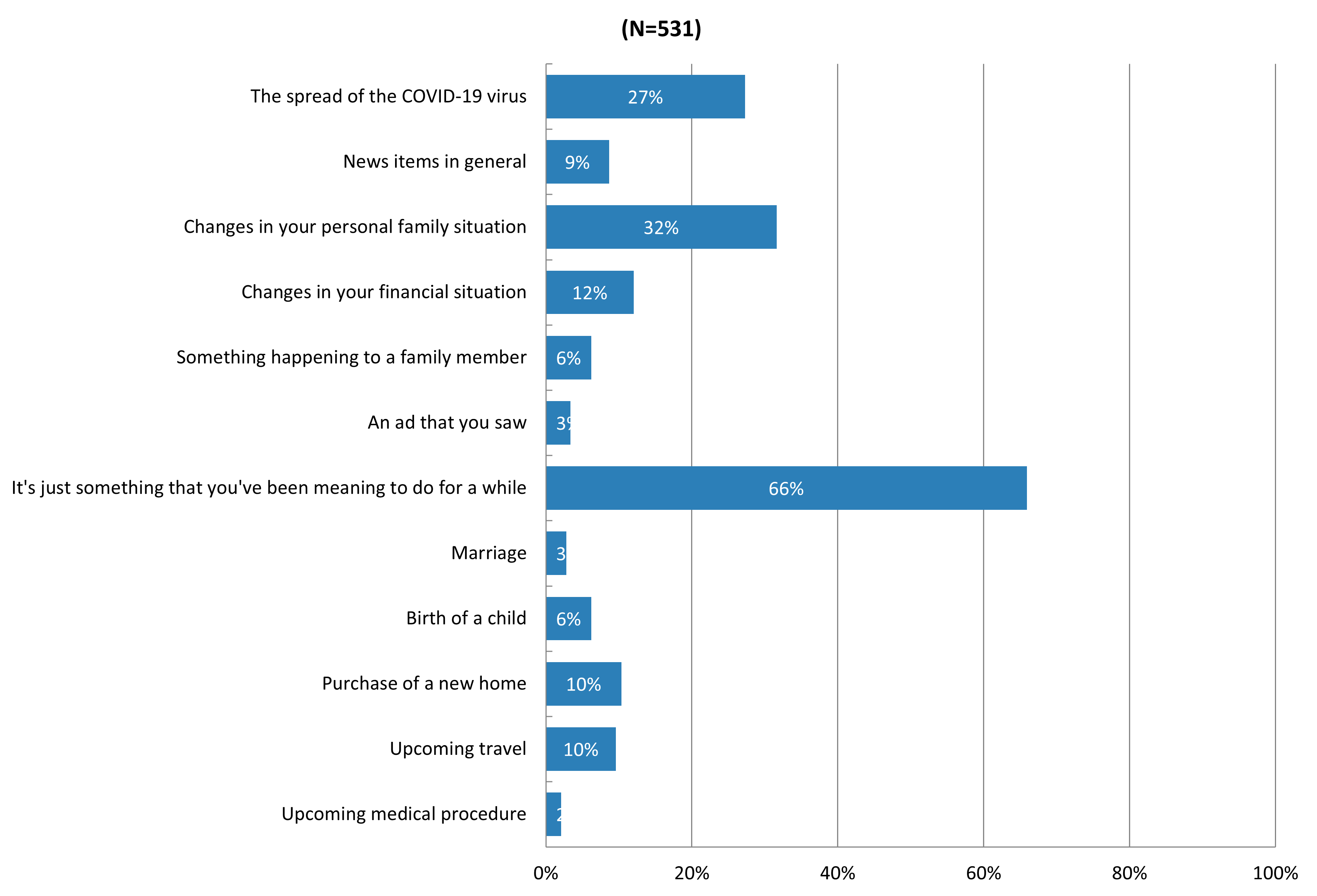
Survey respondents identified multiple reasons for writing their Will. The top motivations included:
- Protecting family members, The plan needed to make sure that all family members including spouse and children and any other dependents would receive complete financial protection.
- People had to face death when the pandemic forced them to think about unexpected fatal outcomes.
- The pandemic served as a wake-up call which finally pushed people to create their Wills after they had been delaying this task for multiple years.
- Parents needed to select guardians for their children because they wanted their kids to receive care from people they personally trusted.
- People wanted to select their asset distribution system instead of accepting the default system which provincial intestacy laws established.
How Did People Choose to Write Their Will?
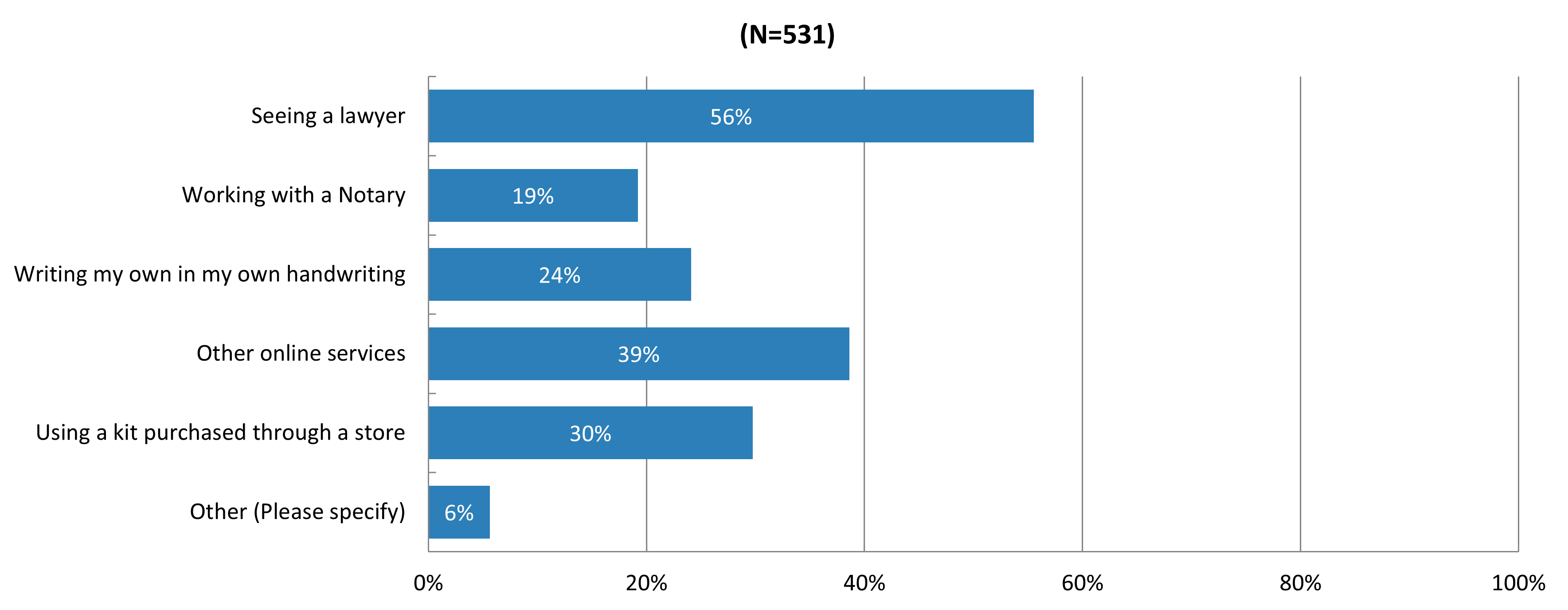
The pandemic caused people to start using online Will creation services at a faster pace. Many Canadians started using online services during the pandemic because law offices either closed completely or worked with reduced staff numbers. The survey results demonstrated that:
- Online Will services became the most popular choice because people found them easy to use while they offered affordable prices and allowed users to finish their documents from their own homes during pandemic lockdowns.
- Lawyer-drafted Wills underwent disruption because law offices moved away from traditional operations which resulted in client service delays and multiple challenges that affected new client acquisition.
- People used Will kits as a temporary solution but these products never gained enough popularity to become a major market segment.
The convenience factor was particularly important during lockdowns. LegalWills.ca operates as an online Will service which enables users to create their Wills within twenty minutes while staying at home without needing to schedule any law office appointments.
What Did People Include in Their Pandemic-Era Wills?
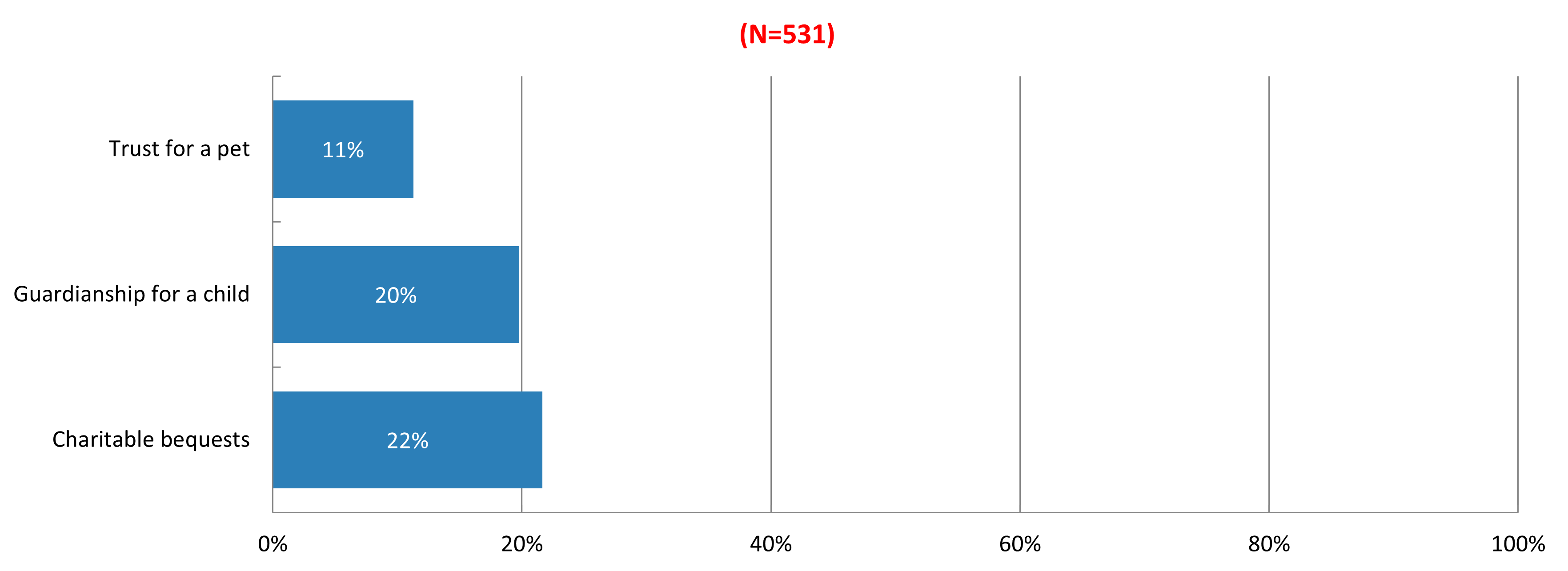
People Who Made Wills During the Pandemic Created Documents Which Followed the Same Patterns as Before the Pandemic Started.
- The process of guardian appointment selection grew because parents started to recognize the importance of choosing guardians for their children who needed protection.
- People who locked down at home started to create digital asset provisions at a growing rate because more of their activities moved online.
- Charitable bequests stayed at the same level while healthcare-related charities received more attention from donors.
- People started to think more deeply about choosing their executors while they considered two essential factors which included the distance between them and the executor and the physical state of the person who would serve as executor.
Did People Also Prepare Other Estate Planning Documents?
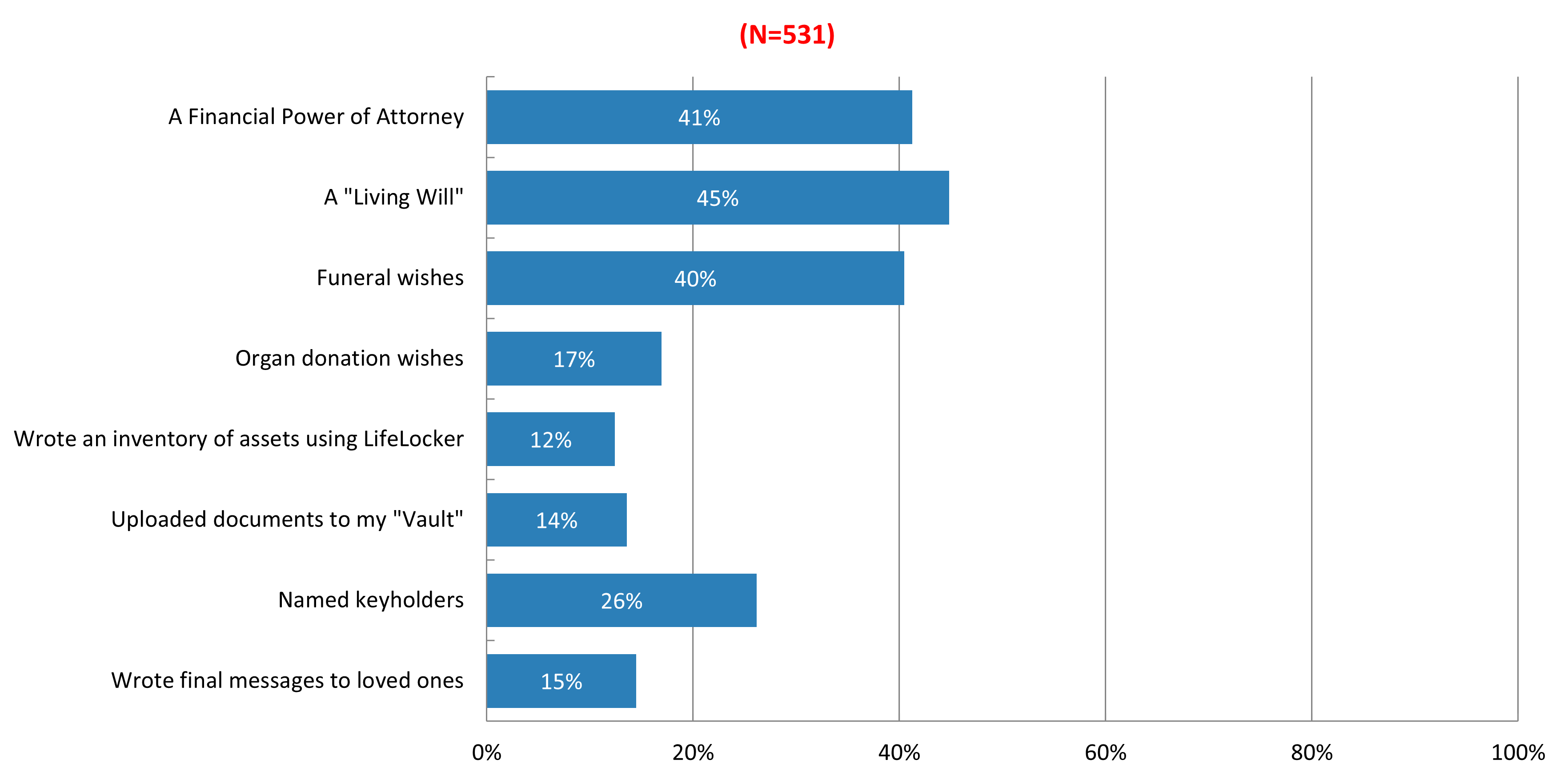
The pandemic increased demand for the full suite of estate planning documents, not just Wills:
- People created more Power of Attorney documents because they needed to decide who would handle their financial affairs when they became unable to manage their money during hospital stays.
- Living Will. Healthcare directives became a priority as people contemplated ICU scenarios, ventilator use, and end-of-life decisions
- Advance care planning. More people engaged in detailed healthcare planning beyond basic Living Will provisions
The pandemic forced Canadians to learn about estate planning which led to better family protection because they had to deal with this subject that they previously avoided.
What Are the Lasting Effects of COVID On Estate Planning?
Multiple patterns which appeared during the pandemic continued to exist after the pandemic ended.
- People will use Online Will services for all upcoming online Will needs. Online Will services which people discovered during the pandemic have maintained their popularity because users now use these services to update their documents and create additional legal papers. Online legal services no longer face discrimination because people now view these services with acceptance.
- Younger demographics are engaged. The pandemic caused people to start writing their first Will at a younger age than they would have before the outbreak. People in this group tend to change their Wills at higher rates because they experience multiple life events throughout their lifetime.
- Healthcare planning is taken more seriously. People now understand that they must create Living Wills and Powers of Attorney for personal care because these documents form essential parts of their complete estate plan.
- Digital estate planning has become a widely accepted practice. The pandemic forced all age groups to adopt digital technology which made digital asset planning an essential part of modern estate planning.
Frequently Asked Questions
People need to write Wills after the pandemic because society requires this practice.
Absolutely. The reasons for writing a Will exist independent of the pandemic; protecting your family, naming a guardian for your children, choosing your executor, and controlling how your assets are distributed. People started to understand the critical need for this issue which has always been essential because of COVID.
How many Canadians wrote their Will because of COVID?
The LegalWills.ca survey showed that 39% of people who made Wills between 2020 and 2021 created their documents because of the pandemic. The number of Canadians who made estate planning documents because of COVID-19 reached hundreds of thousands throughout all Will services which operated both online and offline.
The pandemic forced people to choose different items for their Wills.
The essential content remained the same but three major changes occurred which included increased guardian appointments and digital asset provisions and healthcare-related charitable donations. People also gave more thought to executor selection, considering factors like geographic proximity and health.
What should I do if I wrote a pandemic Will and haven’t updated it?
You must check your Will to verify it maintains your current intentions. People should review their Wills because their life situations probably transformed after 2020 when they established new relationships and had children and acquired property and experienced financial developments. People can update their Wills through LegalWills.ca at no cost while completing the process within a short period of time.

Tim Hewson is one of the founders of LegalWills.ca.
He has over 20 years of experience helping people to write their Will and other estate planning documents. He has been interviewed by many of the major news media outlets including CTV, Global News, The Toronto Star, and other leading Canadian publications. He has also contributed to a number of financial planning books.
Throughout his career, Tim has written extensively on the subject of Will writing and estate planning.