Originally published: November 19, 2014 | Last updated: October 23, 2024
TL;DR: Charitable bequests in Canadian Wills (planned giving) represent a significant and growing channel for philanthropy. Data from LegalWills.ca shows that approximately 10.5% of Will-makers include a charitable bequest. The average monetary gift is between $5,000 and $10,000, though most donors choose to leave a percentage of their residual estate rather than a fixed dollar amount. Health-related charities, religious organizations, and animal welfare groups receive the largest share of planned gifts.
People in Canada practice planned giving through their Will and estate planning by directing their future charity donations. The practice which people refer to as charitable bequests or legacy gifts enables donors to support their favorite causes after they pass away. Most Canadians will never make a more important charitable donation than their Will-based bequest which they leave to charity. The estate does not require any expenses to maintain its value until your death while producing major tax advantages for your property. LegalWills.ca provides an easy method to add charitable bequests into your Will when you create it online and we have obtained special statistics about Canadian planned giving behavior.
Planned giving is the practice of including a charitable donation in your Will or estate plan. Also called a charitable bequest or legacy gift, it allows you to support causes you care about after your death. For many Canadians, a bequest in their Will is the largest single charitable gift they will ever make. It costs nothing during your lifetime, and it can generate significant tax benefits for your estate. LegalWills.ca makes it easy to include charitable bequests when you write your Will online, and we have collected unique data on how Canadians approach planned giving.
Who Includes a Charitable Bequest in Their Will?
Data from LegalWills.ca reveals a clear demographic profile of planned givers. The majority of users who include charitable bequests are aged 55 and older, though younger Will-makers are increasingly adding charitable components. Women are slightly more likely than men to include a bequest. Geographically, planned giving rates are consistent across provinces, with Ontario and British Columbia showing the highest absolute numbers due to population size.
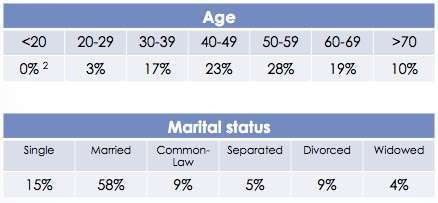
The demographics of those who choose to include a bequest differ from the general Will-making population. Older adults, particularly those without children or with grown children, are significantly more likely to direct a portion of their estate to charity. Couples without dependants and single individuals together make up the largest group of planned givers.
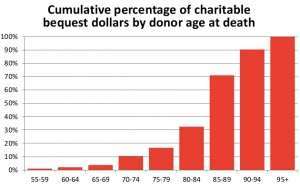
Data shows that planned giving donors select their giving options through their chosen demographic group. The majority of users who include charitable bequests are aged 55 and older, though younger Will-makers are increasingly adding charitable components. Women tend to include a bequest in their plans at a slightly higher rate than men do. The provincial distribution of planned giving remains steady throughout Canada because Ontario and British Columbia show the highest numbers of donors because of their large population bases.
Approximately 10.5% of Wills created through LegalWills.ca include at least one charitable bequest. This figure is consistent with broader Canadian research on planned giving. While 10.5% may seem modest, the aggregate impact is substantial, these gifts collectively represent millions of dollars flowing to Canadian charities each year. The rate has been gradually increasing over time, suggesting growing awareness of planned giving as an estate planning tool.
People who want to add a bequest to their Will show different characteristics than the rest of the population who write Wills. People who reach old age without having children or with their children fully grown tend to donate more of their estate to charitable organizations. The combined total of couples who don’t have children and single people stands as the most extensive group which intends to donate their assets.
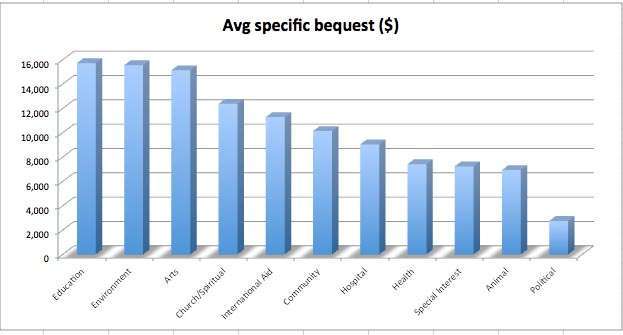
The value of charitable bequests varies widely. Among those who specify a fixed dollar amount, the most common range is $5,000 to $10,000. However, a significant number of donors leave bequests of $25,000 or more. Some leave $100,000 or higher. The median gift size reflects that planned giving is not limited to the wealthy, ordinary Canadians regularly include meaningful charitable gifts in their estate plans.
How Common Are Charitable Bequests in Canadian Wills?
There are three main ways to structure a charitable bequest in a Canadian Will:
- Specific monetary amount: A fixed dollar figure left to a named charity (e.g., “$10,000 to the Canadian Cancer Society”).
- Specific asset: A particular item or property left to a charity (e.g., a piece of real estate or a valuable collection).
- Percentage of residual estate: A share of whatever remains after all debts, taxes, and specific gifts have been distributed.
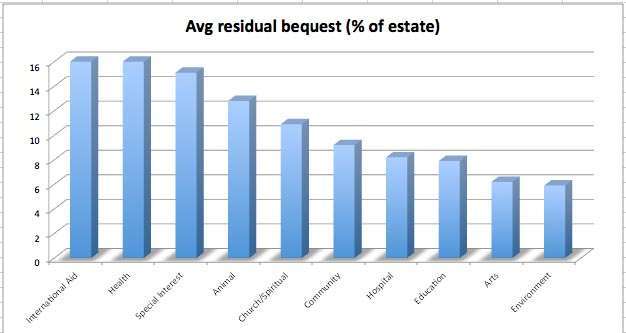
Data from LegalWills.ca shows that the majority of planned givers choose the residual estate approach. This is generally the most flexible and practical option because the gift amount adjusts automatically as the estate value changes over time. It also ensures that family members and other beneficiaries receive their specific gifts first.
The percentage of Wills created through LegalWills.ca which contain at least one charitable bequest stands at 10.5%. Research from Canada shows that planned giving numbers match this data. The 10.5% figure shows a small percentage yet it represents millions of dollars which Canadian charities receive through these gifts during each year. The percentage has shown a steady upward trend which indicates that people now better understand planned giving as an estate planning tool.
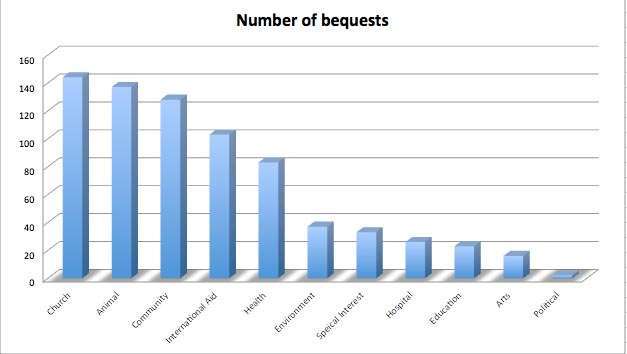
The distribution of planned gifts across charitable sectors reveals clear patterns in Canadian giving priorities. Health-related charities, including cancer research, heart and stroke foundations, and hospital foundations, receive the largest share of charitable bequests. Religious organizations rank second, reflecting the strong connection between faith communities and legacy giving. Animal welfare organizations (including the SPCA, humane societies, and wildlife conservation groups) receive a disproportionately large share of planned gifts compared to their share of lifetime donations, suggesting that many Canadians feel particularly strongly about supporting animal causes in their final wishes.
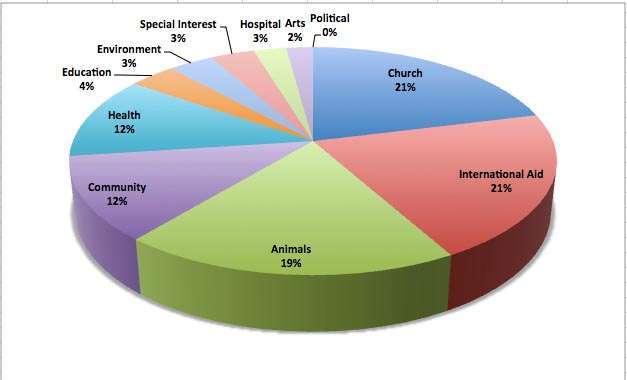
Other sectors receiving significant planned giving include education (universities and scholarship funds), social services, arts and culture, and environmental organizations. International development charities also appear, though less frequently than domestic causes.
How Much Do Canadians Leave to Charity in Their Wills?
Charitable bequests in a Will generate a donation tax credit on the deceased’s final tax return. Unlike lifetime donations, which are capped at 75% of net income, donations made through a Will can be claimed up to 100% of net income in the year of death and the preceding year. This means a large charitable bequest can significantly reduce or even eliminate the estate’s final tax liability. For estates with substantial registered retirement savings (RRSPs or RRIFs) that would otherwise face heavy taxation on death, a charitable bequest can offset much of that tax burden; effectively redirecting money from the government to the charity of your choice.
The value of charitable bequests varies widely. The most common donation amount which people specify in their donations falls between $5,000 and $10,000. The majority of donors choose to leave their donations at amounts which exceed $25,000. Some leave $100,000 or higher. The median gift size demonstrates that Canadians who are not wealthy still participate in planned giving because they regularly donate substantial amounts through their estate plans.
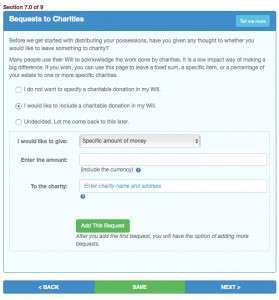
Adding a charitable bequest to your Will is straightforward with LegalWills.ca. During the Will-writing process, you are prompted to add specific gifts, this is where you can name one or more charities and specify the amount, percentage, or asset you wish to leave. You will need the charity’s full legal name and, ideally, its registered charity number (available on the Canada Revenue Agency website). If you already have a Will and want to add a charitable component, you can update your Will anytime through your account. For broader context on Why having a Will matters, see Do I Need a Will?
What Types of Charitable Bequests Do Canadians Choose?
- Approximately 10.5% of Canadian Will-makers include a charitable bequest.
- The most common monetary gift range is $5,000 to $10,000.
- Most donors prefer leaving a percentage of their residual estate rather than a fixed amount.
- Health charities, religious organizations, and animal welfare groups receive the most planned gifts.
- Charitable bequests can claim donation tax credits up to 100% of net income in the year of death.
- Adding a charity to your Will takes minutes and costs nothing extra with an online service.
There are three main ways to structure a charitable bequest in a Canadian Will:
Canada’s planned giving rates are broadly comparable to those in other English-speaking countries. In the United States, approximately 9% of adults include a charitable bequest in their estate plans, while in the United Kingdom the figure is closer to 7%. Australia reports similar rates to Canada at around 10%. However, the average bequest size in Canada tends to be smaller than in the US, partly reflecting differences in estate sizes and tax treatment. What makes Canada unique is the generous tax treatment of charitable bequests, the ability to claim credits against 100% of net income in the year of death is more favourable than the rules in many other countries and creates a strong financial incentive for planned giving.
Specific monetary amount: A fixed dollar figure left to a named charity (e.g., “$10,000 to the Canadian Cancer Society”).
Research and survey data reveal several key motivations behind charitable bequests in Canada. The most commonly cited reasons include a desire to “give back” to causes that have personally affected the donor or their family, a wish to create a lasting legacy beyond their immediate family, and the recognition that a bequest costs nothing during their lifetime. For many donors, writing a Will is the moment they first seriously consider charitable giving, the process itself prompts reflection on what matters most. Religious faith is another significant motivator, particularly for bequests to places of worship, missions, and faith-based organizations. Some donors are motivated specifically by the tax benefits, using charitable bequests strategically to reduce the tax burden on their estate and effectively redirect funds that would otherwise go to the government.
Specific asset: A particular item or property left to a charity (e.g., a piece of real estate or a valuable collection).
While adding a charitable bequest is straightforward, there are several common errors to avoid:
- Using the wrong charity name: Charities often have a legal name that differs from their commonly known name. Using an incorrect or informal name can cause delays or disputes. Always verify the charity’s full registered name and CRA charity registration number.
- Not accounting for estate changes: A fixed dollar bequest made when your estate was worth $500,000 may represent an unintended proportion if your estate shrinks. A percentage-based bequest adjusts automatically.
- Forgetting to update after charity changes: Charities merge, change names, or dissolve. Review your Will periodically to ensure your named charities still exist in the form you intended.
- Not informing the charity: While not legally required, notifying a charity that you have included them in your Will helps them plan and allows them to thank you during your lifetime. Many charities have legacy giving programs that recognize planned donors.
- Overlooking family obligations: In some provinces, dependants have a legal right to challenge a Will if they feel inadequately provided for. Ensure your charitable bequests do not inadvertently create grounds for a Will challenge.
Percentage of residual estate: A share of whatever remains after all debts, taxes, and specific gifts have been distributed.
Several trends suggest that charitable bequests in Canadian Wills will continue to grow. The aging Baby Boomer generation represents the largest transfer of wealth in Canadian history, and this demographic has shown strong philanthropic tendencies. Online Will services are making estate planning more accessible, which means more Canadians are writing Wills, and encountering the option to include charitable gifts for the first time. Additionally, charities themselves are investing more in planned giving programs, educating donors about legacy gifts, and making it easier to include them as beneficiaries. As awareness grows and tools become simpler, planned giving is positioned to become an increasingly important pillar of Canadian philanthropy.

Tim Hewson is one of the founders of LegalWills.ca.
He has over 20 years of experience helping people to write their Will and other estate planning documents. He has been interviewed by many of the major news media outlets including CTV, Global News, The Toronto Star, and other leading Canadian publications. He has also contributed to a number of financial planning books.
Throughout his career, Tim has written extensively on the subject of Will writing and estate planning.