
TL;DR
Myths about Will writing persist across Canada, from the belief that a napkin Will is just as valid as a formal one, to the assumption that common-law partners automatically inherit everything. This article debunks the most common misconceptions using real questions and comments from Canadians, and explains the actual legal rules that apply.
Originally published: August 22, 2021 | Last updated: November 5, 2025
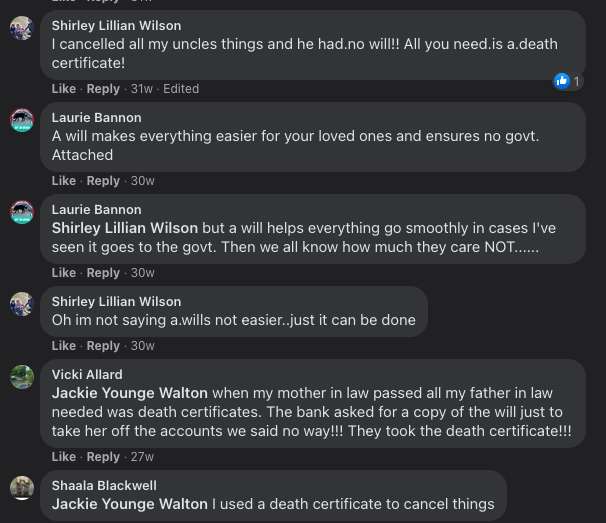
Despite the importance of estate planning, misinformation about Wills remains widespread in Canada. We regularly encounter myths and misconceptions in social media comments, customer questions, and public forums. This article addresses the most persistent myths, many sourced directly from real comments by Canadians, and provides the accurate legal position for each. For our earlier debunking of ten common Will myths, see our companion article.
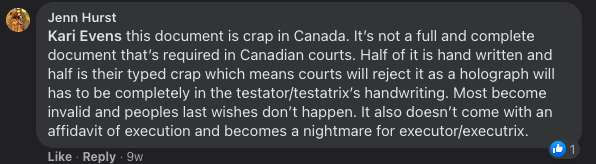
Myth: “I Can Write My Will on a Napkin and It’s Legally Valid”
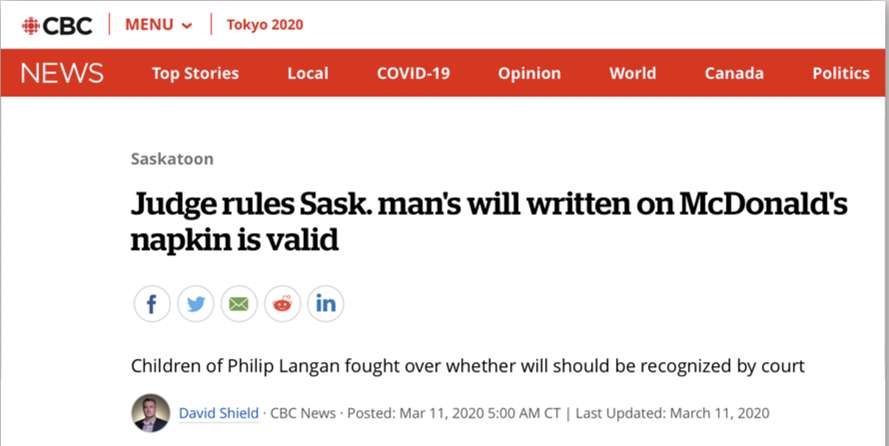
The reality: This is partially true but deeply misleading. In provinces that recognize holographic Wills (Alberta, Manitoba, New Brunswick, Newfoundland, Ontario, Québec, and Saskatchewan), a Will written entirely in the testator’s handwriting and signed by them can be valid; technically, even on a napkin. However:
- The Will must be entirely in the testator’s own handwriting, no typed text, no pre-printed forms
- It must be signed by the testator
- British Columbia, Nova Scotia, and PEI do not recognize holographic Wills
- A napkin Will is extremely vulnerable to challenges; was the person of sound mind? Was it written as a joke? Is the handwriting actually theirs?
- It will almost certainly need to go through probate, which can be expensive and time-consuming
The fact that something is technically possible does not make it a good idea. A properly prepared Will from LegalWills.ca costs $49.95, takes 20 minutes, and avoids these risks entirely.

Myth: “My Common-Law Partner Will Automatically Get Everything”
The reality: This is one of the most dangerous myths in Canadian estate planning. The rights of common-law partners vary dramatically by province, and in many provinces, a common-law partner has no automatic right to inherit under intestacy laws:
| Province | Common-Law Partner Inherits Under Intestacy? |
|---|---|
| British Columbia | Yes (after 2 years cohabitation) |
| Manitoba | Yes (after 3 years or with a child) |
| Saskatchewan | Yes (after 2 years) |
| Ontario | No; common-law partners have no inheritance rights under Ontario intestacy law |
| Québec | No; common-law partners (conjoints de fait) have no inheritance rights |
| Alberta | Yes (adult interdependent partner after 3 years or with a child) |
In Ontario and Québec, Canada’s two most populous provinces, a common-law partner who is not named in a Will receives nothing from the estate. This makes a Will absolutely essential for anyone in a common-law relationship. Learn more about dying without a Will in Canada.

Myth: “Online Wills Aren’t Really Legal”

The reality: A Will created through online methods holds the same legal authority as a Will which a lawyer would create. The law does not distinguish between how a Will is created; what matters is how it is executed (signed and witnessed). A Will which LegalWills.ca creates will become legally valid across all Canadian provinces and territories when you follow the correct procedure for signing and witnessing according to your province’s rules.
The confusion arises from a misunderstanding of what makes a Will legal. The legal requirements are:
- The testator needs to show they possess the mental ability to create a Will
- The Will needs to receive proper signatures and have witnesses who will attest to its authenticity
- The testator needs to create the Will of their own free will
The conditions do not mention any requirement about which person should create the Will or what kind of document creation software needs to be used.
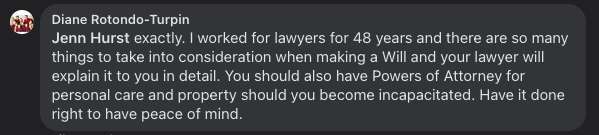
Myth: “I Don’t Need a Will Because I Don’t Own Anything”
The reality: A Will serves functions which go beyond asset allocation. A Will provides essential benefits to people who possess limited financial assets through the following functions:
- Names an executor, someone you trust to handle your affairs after death
- Names a guardian for minor children, the only legal way to choose who raises your children
- The document establishes rules for digital assets which include online accounts and photos and social media content and cryptocurrency holdings.
- The document contains specific instructions which explain how the person wants their funeral to proceed and where they want to be buried.
- Prevents family disputes, even small estates can cause significant conflict
People tend to underestimate the total value which their estate holds. Your estate consists of bank accounts together with retirement savings and personal belongings and vehicles and digital assets.

Myth: “My Will Can Be Challenged and Overturned Easily”

The reality: The process of challenging a Will requires expensive legal work which produces almost no successful outcomes. A Will contest needs evidence to support one of the following few legal grounds which courts recognize:
- The testator failed to understand their actions because they lacked the mental ability to create a Will
- Someone used coercion or manipulation to influence the testator during their life
- The Will failed to receive proper signatures and witness attestations during its execution process.
- The Will contains fraud or forgery which makes the document appear different from what it actually represents.
The process of creating a valid Will through proper preparation and execution makes it nearly impossible to challenge the document in court. The court starts with a presumption that the Will is valid. The person who challenges the document needs to provide evidence to support their position.
Myth: “Once I Write a Will, I Never Need to Update It”

The reality: A Will needs to undergo evaluation and modification after any major life change occurs. The following events require you to review your Will:
- Marriage or divorce (in many provinces, marriage automatically revokes a Will)
- A person needs to create a Will when they either bring a new child into their family through birth or adoption.
- The death of a beneficiary or executor requires you to update your Will.
- You need to update your Will when your assets experience major changes which include property purchases and inheritance receipts.
- People who move to new provinces need to update their Will after their relocation.
- People who change their relationships need to update their Will.
At minimum, review your Will every 3–5 years. The process of updating your Will at LegalWills.ca takes just a few minutes and costs nothing so you should not allow your document to become outdated.
Myth: “A Lawyer’s Will Is Always Better Than an Online Will”
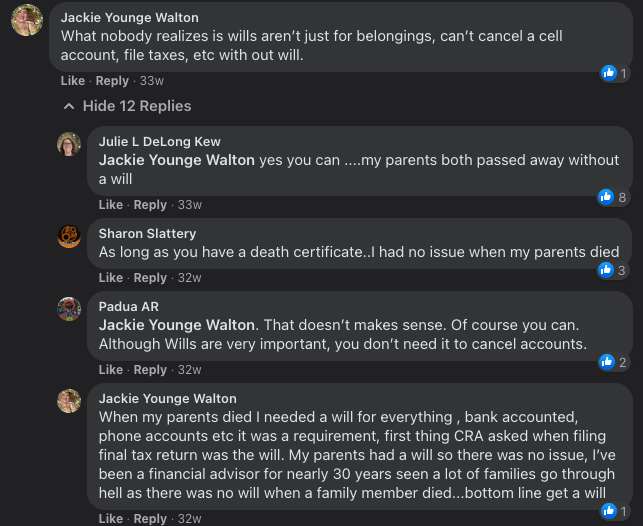
The reality: Most Canadians who need simple estate planning services can create an online Will which offers them legal protection similar to a lawyer-made Will at a much lower price. A lawyer-drafted Will becomes necessary when you face complicated legal situations which require professional assistance:
- Blended families with potential disputes
- Business succession planning
- Significant assets in multiple countries (though the Expat Will service addresses this)
- Complex trust arrangements
- Situations involving potential capacity challenges
An online Will represents the best solution for most Canadians who possess typical beneficiary needs and own a home and have savings and want to protect their spouse and children. See our guide to questions for an estate planning lawyer to help determine which option is right for you.
Myth: “I Can Just Tell My Family What I Want. I Don’t Need It in Writing”
The reality: Canadian estate law does not recognize verbal instructions as valid legal documents except for rare cases which apply to active military personnel. A person who does not create a written Will will lose their ability to direct how their property should be handled.
- Your verbal wishes are legally unenforceable
- Provincial intestacy laws determine everything
- Family members may disagree about what you “really wanted,” leading to costly disputes
- A court-appointed administrator who lacks your selection authority will take control of your estate management.
Myth: “If I’m Married, My Spouse Gets Everything Automatically”

The reality: This is not true in most provinces. Under intestacy laws, the surviving spouse typically receives a preferential share (the first portion of the estate), but the remainder is often split between the spouse and children. For example:
- Ontario: The spouse receives the first $350,000; anything above that is split between the spouse and children
- British Columbia: The spouse receives the first $300,000 (if children are also the spouse’s) or $150,000 (if children are not the spouse’s); the remainder is shared
- Alberta: The spouse receives the first $150,000; the remainder is shared with children
Only a Will guarantees your spouse receives exactly what you intend.
Myth: “Estate Planning Is Only for Rich People”

The reality: Estate planning is for everyone, regardless of wealth. The cost of a Will through LegalWills.ca is $49.95; less than a dinner out. The consequences of not having a Will affect families of all income levels: court-appointed guardians, intestacy distribution, family disputes, and unnecessary legal costs. The Will-less death process creates major difficulties for families who possess limited estate value.
Frequently Asked Questions
What is the biggest myth about Wills in Canada?
The biggest myth is that you don’t need a Will because you’re too young, don’t have enough assets, or assume your spouse will get everything automatically. All three assumptions lead to incorrect results which will generate major difficulties for your family.
Are online Wills legally valid in Canada?
Yes. An online Will becomes legally effective throughout all Canadian provinces and territories when you follow proper procedures for signing and witnessing the document. The law does not distinguish between how a Will is drafted, only how it is executed.
Can a common-law partner inherit without a Will?
The answer depends on which Canadian province you live in. Common-law partners in Ontario and Québec do not receive any inheritance rights automatically. Common-law partners in BC, Alberta, Manitoba, and Saskatchewan can receive inheritance rights when they meet specific requirements. A Will is essential for common-law couples in every province.

Tim Hewson is one of the founders of LegalWills.ca.
He has over 20 years of experience helping people to write their Will and other estate planning documents. He has been interviewed by many of the major news media outlets including CTV, Global News, The Toronto Star, and other leading Canadian publications. He has also contributed to a number of financial planning books.
Throughout his career, Tim has written extensively on the subject of Will writing and estate planning.