TL;DR
Three terms, “digital Will,” “electronic Will,” and “online Will”, are often confused but mean different things. An online Will is created using a web-based service but printed and signed on paper. An electronic Will is signed with an electronic signature and witnessed remotely via video. A digital Will encompasses both and includes digital storage. All three produce legally valid Wills in Canada when properly executed.
Originally published: February 11, 2022 | Last updated: January 14, 2026
The terms “digital Will,” “electronic Will,” and “online Will” are frequently used interchangeably, but they refer to distinct concepts. Understanding the differences is important because the legal requirements for each vary by province. This guide clarifies the terminology and explains how each type works at LegalWills.ca.

What Is an Online Will?

An online Will is a Will created using a web-based platform. The testator answers guided questions online, and the system generates a legally valid Will document. The key characteristics are:
- Created online: The Will is drafted through a website or web application
- Printed on paper: The final document is printed as a traditional paper Will
- Signed with a wet signature: The testator signs the printed document with a pen
- Witnessed in person: Two witnesses physically observe the signing and sign the document
An online Will is legally valid in every Canadian province and territory because the final product is a standard paper Will, the only difference from a lawyer-drafted Will is how it was created, and no law requires a Will to be drafted by a lawyer.
This is the most widely used modern Will option and is available to all LegalWills.ca customers for $49.95. See our guide on making a Will in Canada.
What Is an Electronic Will?
An electronic Will (or e-Will) goes a step further: the document is signed electronically rather than with a pen on paper. Key characteristics:
- Created online: Same as an online Will
- Exists in digital format: The Will document is not printed, it remains electronic
- Signed with an electronic signature: The testator applies an electronic signature
- Witnessed remotely: Witnesses observe the signing via audio-visual technology (video call) and apply their own electronic signatures
Electronic Wills are only legally valid in provinces that have enacted specific legislation permitting them; currently Ontario and British Columbia. LegalWills.ca supports electronic Will signing through its Video Signing Room.
What Is a Digital Will?
A digital Will is a broader term that encompasses the entire digital estate planning experience. It includes:
- Online creation: Will drafted through a web platform
- Electronic signing: Option to sign electronically (where permitted)
- Digital storage: Encrypted storage in a secure vault (MyVault)
- Keyholder access: Designated individuals can access the Will after death
- Digital asset provisions: Specific instructions for online accounts, cryptocurrency, and digital property
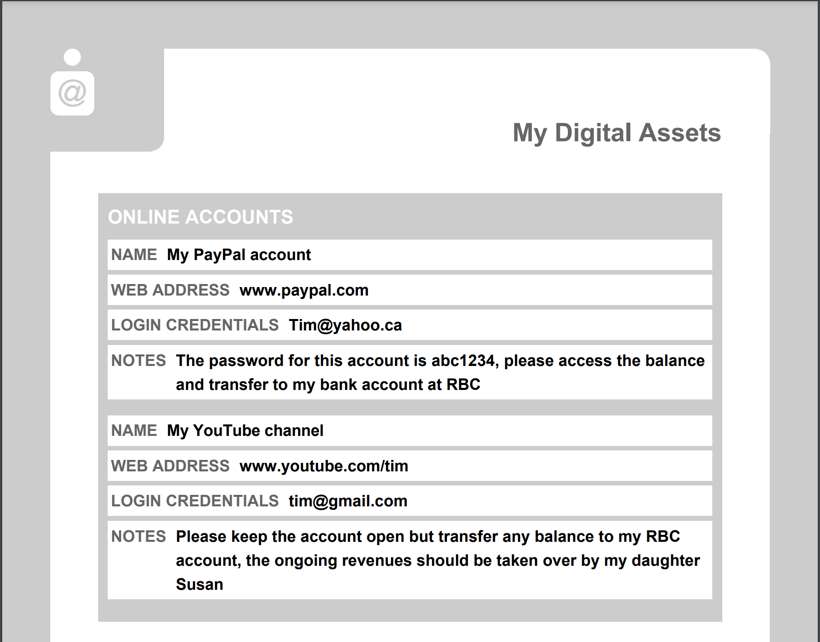
The term “digital Will” is sometimes also used informally to refer to the digital asset provisions within a Will; instructions for handling online accounts, social media profiles, cryptocurrency, and other digital property after death.
How Do the Three Types Compare?
| Feature | Online Will | Electronic Will | Digital Will |
|---|---|---|---|
| Created online | Yes | Yes | Yes |
| Printed on paper | Yes | No | Optional |
| Wet signature | Yes | No (electronic) | Either |
| In-person witnesses | Yes | No (remote via video) | Either |
| Valid in all provinces | Yes | Only ON and BC | Depends on signing method |
| Digital storage | Optional | Yes (MyVault) | Yes (MyVault) |
What Is a Digital Executor?
A digital executor is a person you appoint (usually within your Will) to manage your digital assets after death. While your primary executor handles your physical and financial estate, a digital executor specifically handles:
- Online accounts (email, social media, cloud storage)
- Cryptocurrency and digital investments
- Digital subscriptions and memberships
- Online business assets (websites, domains, digital products)
- Digital photos, documents, and creative works
In many cases, the digital executor is the same person as the primary executor. However, appointing a separate digital executor may be advisable if your primary executor is not tech-savvy or if your digital assets are extensive. Learn more about digital assets in your Will.
Which Option Should You Choose?
The best choice depends on your province and preferences:
- If you live in Ontario or BC and prefer a fully digital experience: Choose an electronic Will with virtual witnessing through the Video Signing Room
- If you live in any other province: Choose an online Will; create it at LegalWills.ca, print it, and sign it in person with two witnesses
- Regardless of province: Consider using MyVault for secure digital storage and the Canada Will Registry for registration

Frequently Asked Questions
Is an online Will the same as an electronic Will?
No. An online Will is created online but printed and signed on paper with a wet signature. An electronic Will is signed with an electronic signature and witnessed via video. Both are legally valid, but electronic Wills are only permitted in Ontario and BC.
Do I need to include digital assets in my Will?
It is strongly recommended. Digital assets, including online accounts, cryptocurrency, digital photos, and social media, are an increasingly important part of modern estates. Without instructions in your Will, these assets may be lost or inaccessible to your family.
Can I create an electronic Will if I live in Alberta?
Not yet. Alberta has not enacted legislation permitting electronic Wills. Alberta residents should create an online Will and sign it traditionally on paper. Check LegalWills.ca for updates as provincial laws continue to evolve.
Is a digital Will more secure than a paper Will?
A digital Will stored in an encrypted vault with keyholder access is arguably more secure than a paper Will stored in a filing cabinet. It cannot be accidentally destroyed by fire or flood, cannot be altered without detection, and can be accessed by authorized parties from anywhere. However, maintaining a paper backup is still recommended.

Tim Hewson is one of the founders of LegalWills.ca.
He has over 20 years of experience helping people to write their Will and other estate planning documents. He has been interviewed by many of the major news media outlets including CTV, Global News, The Toronto Star, and other leading Canadian publications. He has also contributed to a number of financial planning books.
Throughout his career, Tim has written extensively on the subject of Will writing and estate planning.