TL;DR
Couples in Canada should each write their own separate Will, not a joint Will. Mirror Wills are the standard approach: two individual Wills with matching terms that name each other as primary beneficiary and executor. Joint Wills (one document for two people) create serious legal complications and are not recommended. LegalWills.ca makes it easy to create matching mirror Wills as a couple.
Originally published: January 17, 2021 | Last updated: September 17, 2025
Every couple in Canada needs two separate Wills; one for each partner. The recommended approach is a mirror Will, where both partners create individual Wills with matching provisions. Each Will names the other partner as primary beneficiary and executor, with identical backup plans if both partners die simultaneously. This is not the same as a joint Will, which is a single document covering two people and should be avoided.

How Can Couples Prepare a Will in Canada?
Canadian couples have three main options for preparing their Wills:
| Option | Cost | Time | Best For |
|---|---|---|---|
| Estate planning lawyer | $1,000–$3,000+ for two Wills | 2–4 weeks | Complex estates, blended families with disputes |
| Online Will service (LegalWills.ca) | $79.95 for two Wills | 20 minutes each | Most couples; straightforward, legally valid |
| Will kit | $15–$35 | 1–2 hours each | Not recommended; high error rate |
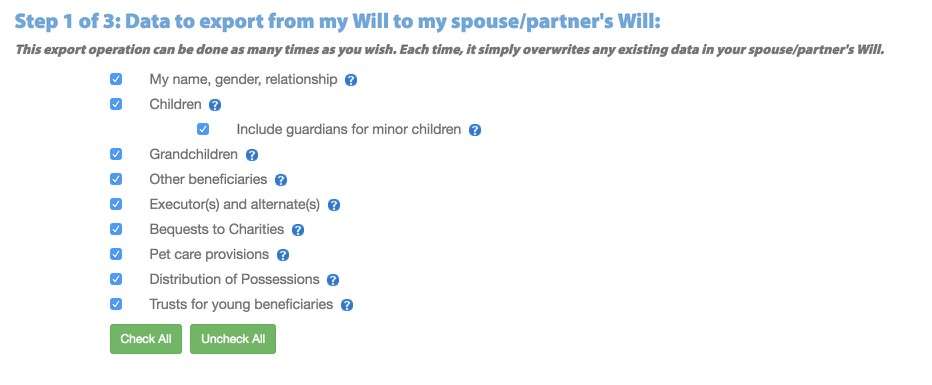
At LegalWills.ca, each partner creates their own account and prepares their own Will. The process is designed so couples can work through the questions together, ensuring their Wills are coordinated and consistent.
What Is the Difference Between a Joint Will and a Mirror Will?
This is the most important distinction for couples to understand:
| Feature | Joint Will | Mirror Will |
|---|---|---|
| Documents | One Will for two people | Two separate Wills with matching terms |
| Can the survivor change it? | No, the surviving partner is bound by the joint terms | Yes, each Will is independent and can be updated at any time |
| Legal complications | High, creates a binding contract between partners | Low, standard, well-understood legal documents |
| Recommended? | No, avoid joint Wills | Yes, the standard approach for couples |
A joint Will is a single document that serves as the Will for both partners. When the first partner dies, the joint Will becomes irrevocable, the surviving partner cannot change it, even if their circumstances change dramatically. This creates serious problems: the survivor cannot remarry and update their estate plan, cannot adjust for new grandchildren, and cannot respond to changes in tax law or family dynamics. Joint Wills are legally valid in Canada but are strongly discouraged by estate planning professionals.
A mirror Will consists of two completely separate Wills that contain matching provisions. Each partner independently owns and controls their own Will. After the first partner dies, the surviving partner is free to update their Will as needed. This flexibility is the primary reason mirror Wills are the standard recommendation.
How Do Couples Set Up Their Distribution Plans?
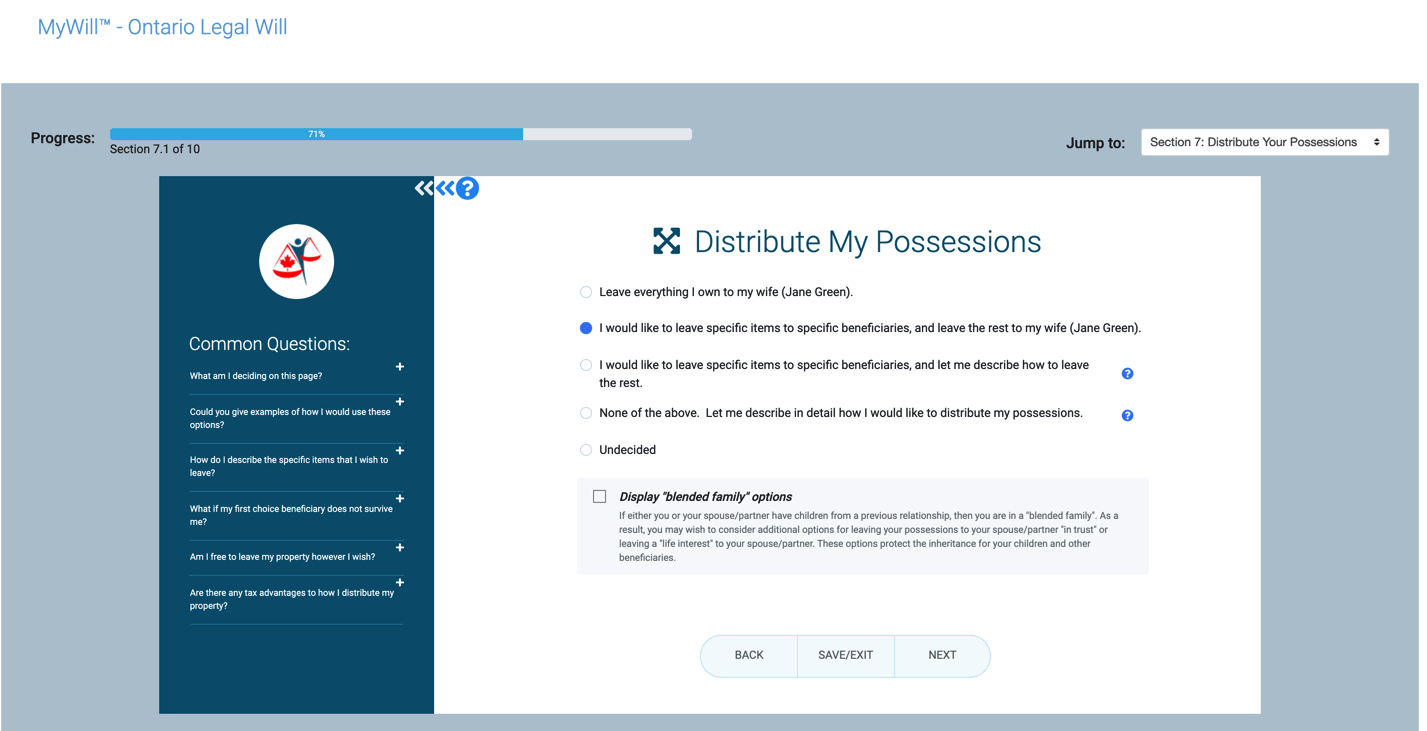
The distribution plan functions as the main part of every Will because it details which people will receive your assets. For couples who choose mirror Wills their documents usually follow this structure:
- Primary plan: All assets should transfer to the partner who remains alive
- Alternate plan: If the partner predeceases or both die simultaneously, assets go to children (equally or in specified proportions), other family members, or named beneficiaries
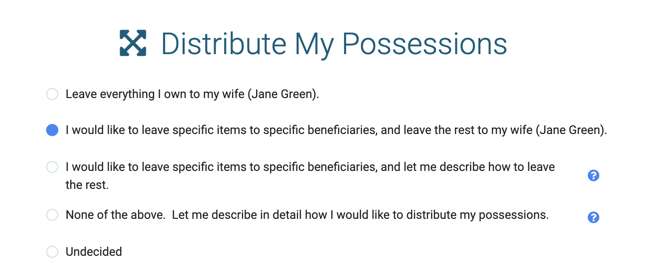
This two-tier structure ensures that your assets are protected regardless of the order of death. Both partners’ Wills should have coordinated alternate plans so that the same beneficiaries receive the assets no matter which partner dies first.
What is a survivorship clause?
The survivorship clause operates as a common disaster clause which comes into effect when both partners pass away within a short time span after each other. The clause establishes that your partner will receive the gift if they survive you by 30 days but it becomes void if they die before you reach that 30-day mark which will make the property follow the alternate distribution plan. The law prevents two probate processes from running back-to-back because this would create dual probate costs and tax issues.
What Should the Alternate Distribution Plan Include?
The plan becomes operational when your partner passes away before you or when you both die in the same disaster. Key decisions include:
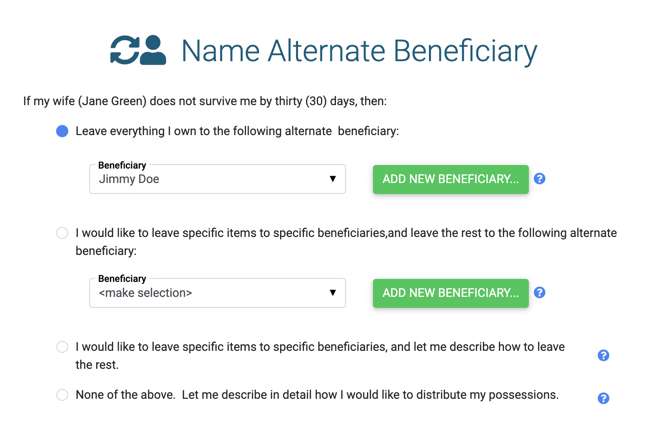
- Most couples choose their children to receive their property when they become alternate beneficiaries. The Will should include a testamentary trust which will hold assets until children reach their designated age because they remain under age restriction.
- Equal vs. unequal distribution: Decide whether children receive equal shares or different amounts based on their circumstances.
- Contingent beneficiaries: Name backup beneficiaries in case a child predeceases both parents, for example, specifying that a deceased child’s share goes to their own children (your grandchildren) per stirpes.
- Charitable bequests: Some couples include gifts to charities in their alternate plan.
How Should Couples Name an Executor in Mirror Wills?
In mirror Wills, each partner typically names the other as their primary executor. The executor needs to handle all estate operations by paying off debts while they must submit tax returns and follow Will instructions to distribute assets.
Both Wills should also name an alternate executor, someone who steps in if the partner is unable or unwilling to serve. Common choices include:
- An adult child
- A trusted sibling or friend
- A professional executor (trust company)
The alternate executor becomes essential because they will manage both estates when both partners pass away at the same time.
What About Naming a Guardian for Children?
The Will stands as the single official document which allows couples who have children under age to designate someone for guardianship. The two partners need to select the same guardian person in their Wills to stop any disagreements from developing. Key considerations:
- Choose someone who shares your parenting values
- Ensure the guardian is willing and able to take on the responsibility
- Name an alternate guardian as backup
- The guardian needs to choose their work location because children who move to a different city or province will experience increased stress levels.
- Discuss financial arrangements; will the guardian have access to estate funds for the children’s care?
Do Couples in Blended Families Need Special Considerations?
Yes. The process of estate planning needs special attention when couples form blended families because they bring children from their previous relationships. Key issues include:
- The need of the surviving partner creates a conflict with the requirements of children who come from a previous relationship.
- Life interest trusts provide a common solution which allows the surviving partner to receive lifetime access to specific assets (including the family home) while the remaining property passes to children from the first marriage after the survivor passes away.
- Separate asset treatment: Some couples in blended families prefer to keep certain pre-relationship assets separate in their estate plans
- Family members who understand the estate plan details will help prevent legal disputes about Wills when they learn about the plan through direct conversations.
Frequently Asked Questions About Couple’s Wills
Can common-law partners make mirror Wills?
Yes. Mirror Wills function independently from marriage because they allow any two individuals to create matching estate plans. Common-law partners and domestic partners along with any two people who want to create matching estate plans can establish mirror Wills. However, common-law partners should be aware that intestacy laws vary by province and may not protect the surviving common-law partner the same way they protect a married spouse.
What if one partner wants to leave assets to someone different?
Mirror Wills do not have to be identical. Each partner can include unique provisions, for example, one partner might leave a specific item to a sibling or make a charitable bequest. The “mirror” aspect refers to the overall structure (naming each other as primary beneficiary and executor), not every individual provision.
Should both Wills be prepared at the same time?
Yes. Preparing both Wills simultaneously ensures they are coordinated and consistent. The other partner needs to update their Will simultaneously when one partner chooses to update their Will at a later time. The platform allows users to update their Wills at no cost while they complete the process within a few minutes.
Can we use the same witnesses for both Wills?
Yes. The two witnesses who sign the first Will will also validate the second Will. However, neither partner can serve as a witness for the other’s Will. The witnesses must be adults who are not beneficiaries of either Will. For detailed signing requirements, see our guide on the Affidavit of Execution and signing your Will.
How much does it cost for a couple to prepare Wills at LegalWills.ca?
The cost for each Will is $49.95 which means couples need to pay $79.95 for two complete Wills that come with unlimited updates and legal validity. This compares to $1,000–$3,000 or more for two lawyer-drafted Wills. Learn more about the cost of a Will in Canada.

Tim Hewson is one of the founders of LegalWills.ca.
He has over 20 years of experience helping people to write their Will and other estate planning documents. He has been interviewed by many of the major news media outlets including CTV, Global News, The Toronto Star, and other leading Canadian publications. He has also contributed to a number of financial planning books.
Throughout his career, Tim has written extensively on the subject of Will writing and estate planning.