
Originally published: June 6, 2016 | Last updated: January 15, 2025
TL;DR: A LegalWills.ca survey of over 1,200 Canadians found that the number of adults without a valid Will is significantly higher than commonly reported. When factoring in outdated Wills, over 70% of Canadian adults lack adequate estate planning. The problem spans all age groups and income levels. Key findings: the Will-writing system is broken, affordability is not the barrier, and most people underestimate the consequences of dying without a Will.
Most surveys indicate that 50-55% of Canadian adults have established a Will. The research conducted by LegalWills.ca demonstrates that these statistics fail to show the entire situation. The actual number of Canadians who possess sufficient estate planning documents becomes very low when you consider Wills which have become obsolete because they no longer represent the person’s present family dynamics and property holdings and desired outcomes. Our research team conducted a survey which included 1,200 Canadian citizens from different backgrounds to understand the current situation of Will creation throughout Canada.
Most surveys report that approximately 50-55% of Canadian adults have a Will. However, our research at LegalWills.ca reveals that these numbers paint an incomplete picture. When you account for Wills that are significantly outdated, documents that no longer reflect the person’s current family situation, assets, or wishes, the true number of Canadians with adequate estate planning drops dramatically. Our survey of over 1,200 Canadians across all demographics provides a more nuanced view of the state of Will-writing in Canada.

What Did the Survey Find?
When asked “Do you have a Last Will and Testament?”, the overall results showed that a significant majority of respondents did not have a current, valid Will. Even among those who answered “yes,” a substantial proportion admitted their Will was more than five years old and had not been updated to reflect major life changes.
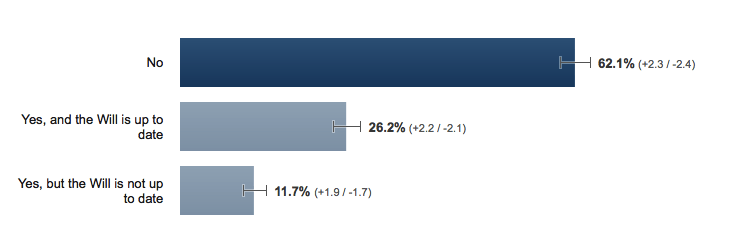
When we filtered for adults over 35, the demographic most likely to have dependants, assets, and estate planning obligations, the results were particularly striking.
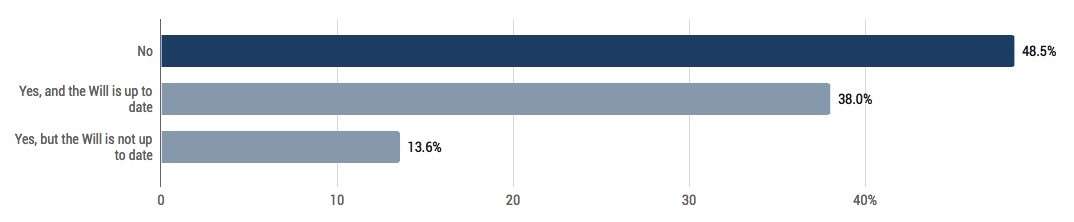
The majority of survey participants revealed they lacked a current valid Will when they answered the question about their possession of a Last Will and Testament. The respondents who said “yes” still admitted that their Wills remained unmodified for more than five years after their essential life events occurred.
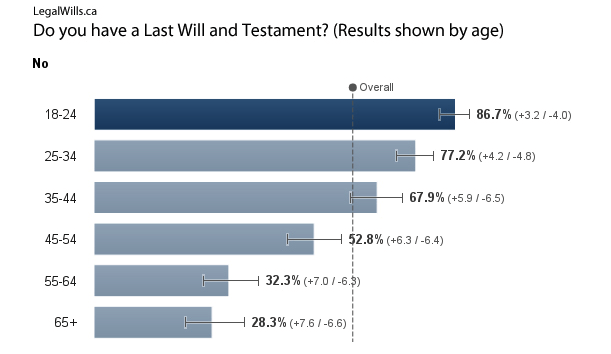
Will ownership increases with age, as expected, but not as dramatically as many assume. Young adults (18-34) have the lowest rates of Will ownership, but even among seniors (65+), a significant minority still lack a valid Will. The middle-aged group (35-54), arguably those with the greatest need due to dependent children and mortgages, shows alarmingly low rates of current, up-to-date Wills.
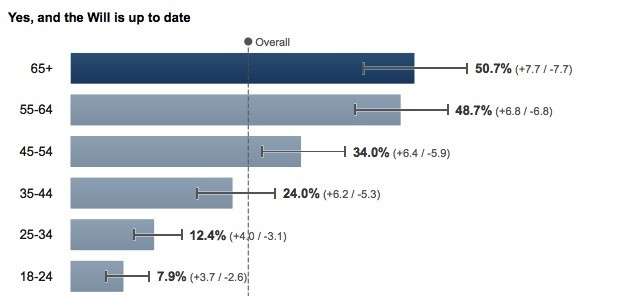
When we look at the age distribution of those without a Will, the data reveals that the problem is not confined to young adults. Canadians in their 40s, 50s, and even 60s make up a large proportion of those without estate planning.
Our research team evaluated people who reached 35 years of age because this group stands as the most probable to possess children and financial resources and require estate planning. The survey results showed startling findings when we examined this specific group.
Yes. An outdated Will can be worse than no Will at all. A Will that names a now-ex-spouse as primary beneficiary, fails to include children born after it was written, or does not account for significant asset changes creates confusion and potential legal challenges. Our survey found that a substantial percentage of respondents who claimed to have a Will had not updated it in over five years, and many had experienced major life changes during that period.
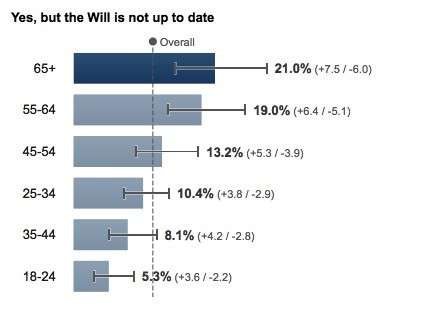
People between 18 and 24 years old show different Will ownership patterns than any other age group.
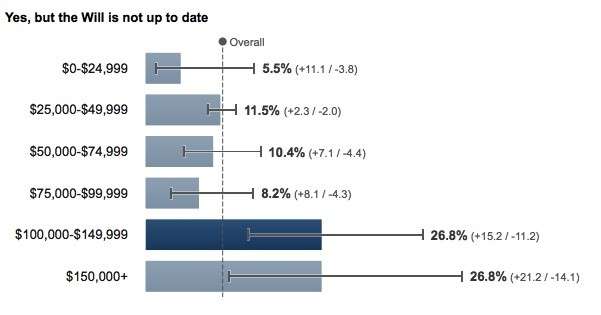
Contrary to common assumptions, income level does not strongly predict whether someone has a Will. While higher-income Canadians are somewhat more likely to have a Will, the difference is smaller than expected. Low and middle-income Canadians have Wills at rates only slightly below their wealthier counterparts. This confirms that affordability is not the primary barrier, a finding consistent with the availability of affordable online Will services at $49.95.
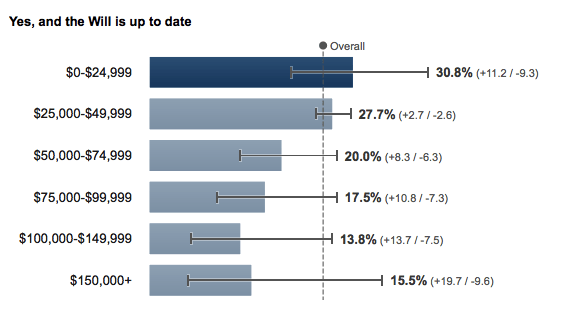
The rate of outdated Wills also shows little variation by income, suggesting that the barriers to updating a Will are psychological rather than financial.
People tend to create their first Will when they reach 40 years of age according to the data. The ownership of Wills grows through time but the process happens at a slower pace than what most people believe. Young adults between 18 and 34 years old represent the smallest group of people who possess Wills but many seniors above 65 years old still do not have valid Wills. The middle-aged population between 35 and 54 years old needs Wills most because they support children and pay for homes but their current Will ownership remains shockingly low.
- The Will-writing system is broken: Traditional lawyer-based Will writing is too expensive, too inconvenient, and too slow for most Canadians. The result is mass non-compliance with a basic estate planning necessity.
- Affordability is not the barrier: People at all income levels avoid writing Wills at similar rates. The real barriers are procrastination, perceived complexity, and a false sense of urgency.
- People wait for the “perfect time”: Many respondents planned to write a Will “when they got married,” “when they had kids,” or “when they retired.” These milestones come and go without action.
- People underestimate the consequences: Most respondents did not fully understand what happens when you die without a Will, including the impact on their spouse, children, and family.
- Not having a Will is a missed opportunity: Beyond asset distribution, a Will enables charitable giving, guardian designations, and tax planning that are impossible without one.
- People overestimate the difficulty: The majority of respondents believed writing a Will was more complex and time-consuming than it actually is. In reality, it takes about 20 minutes online.
- Myths about online services persist: Many respondents were unaware that online Wills are legally valid, or believed common myths about Will requirements.
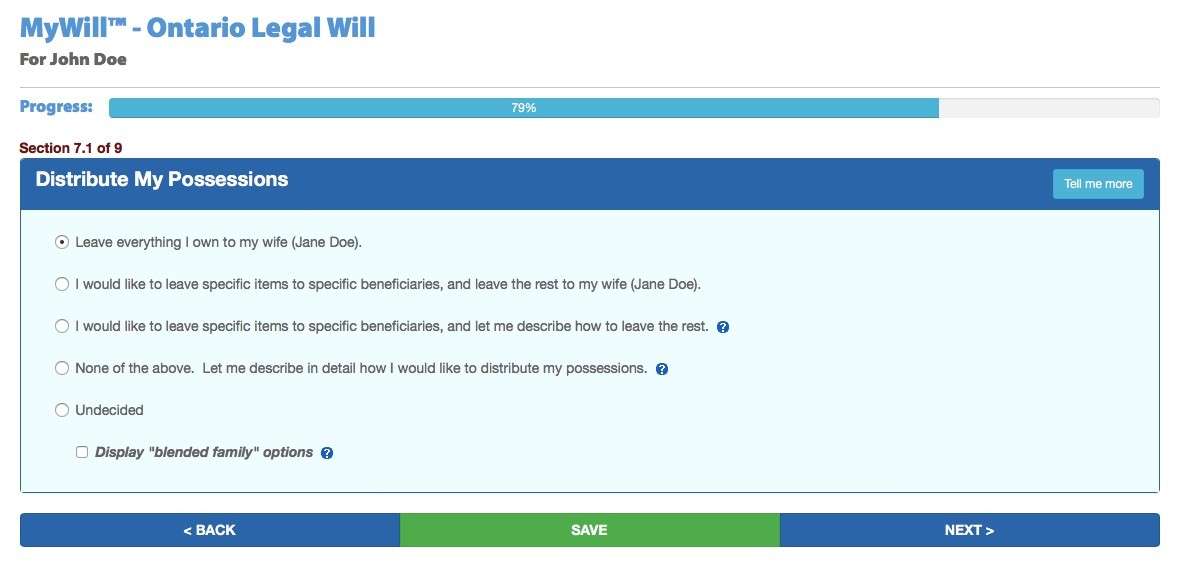
The solution is clear: accessible, affordable, and easy-to-update Will services need to reach more Canadians. LegalWills.ca has been working toward this goal since 2000. If you are among the 70%+ of Canadians without adequate estate planning, today is the day to fix that. Start with our guide to why you need a Will.

Tim Hewson is one of the founders of LegalWills.ca.
He has over 20 years of experience helping people to write their Will and other estate planning documents. He has been interviewed by many of the major news media outlets including CTV, Global News, The Toronto Star, and other leading Canadian publications. He has also contributed to a number of financial planning books.
Throughout his career, Tim has written extensively on the subject of Will writing and estate planning.