Originally published: April 3, 2017 | Last updated: March 19, 2025
TL;DR: This is the complete guide to writing a Will in Canada using LegalWills.ca. It covers every key definition (executor, beneficiary, guardian, trust, estate, codicil), explains each clause in a standard Canadian Will (revocation, executor appointment, debts, specific gifts, charitable bequests, residual estate, trusts, guardians, executor powers), and walks through the signing process. The entire process takes about 20 minutes and costs $49.95.
The legal language used in Will writing becomes difficult to understand for people who lack experience with these terms. This guide explains every term and clause you will encounter when creating your Will at LegalWills.ca. Research process will show you the actual contents of your Will and the importance of each clause and every stage of the procedure.
Writing a Will involves legal terminology that can seem intimidating if you are not familiar with it. This guide explains every term and clause you will encounter when creating your Will at LegalWills.ca. By the end, you will understand exactly what your Will says, why each provision matters, and how the entire process works from start to finish.

Key Definitions You Need to Know
What Is a Last Will and Testament?
A Last Will and Testament is a legal document that specifies how your assets are distributed after death, names an executor to manage the process, and designates guardians for minor children. The word “last” means your most recent valid Will supersedes all previous versions. For a complete glossary, see our definitions guide.
The legal document Last Will and Testament serves to distribute your assets after death while proving your authority through an appointed executor and your duty to care for children who remain under your protection. The word “last” means your most recent valid Will supersedes all previous versions. For a complete glossary, see our definitions guide.
Revoking a Will means cancelling it so it no longer has legal effect. Every new Will should include a revocation clause that cancels all previous Wills and codicils. A Will can also be revoked by marriage (in most provinces), by physically destroying it, or by creating a new Will. You should never have multiple active Wills, only the most recent, properly executed Will should exist.
What Does It Mean to Revoke a Will?
A codicil is a formal amendment to an existing Will. It must be signed and witnessed with the same formality as the original Will. While codicils were common before online services existed, the better approach today is to create an entirely new Will when changes are needed. With LegalWills.ca, you simply log in and update, no codicil required.

The process of revoking a Will makes the document useless for all legal purposes. Every new Will should include a revocation clause that cancels all previous Wills and codicils. The law allows marriage to revoke a Will in most Canadian provinces but individuals can also destroy their Wills to make them invalid. You should never have multiple active Wills, only the most recent, properly executed Will should exist.
Your executor (estate trustee in Ontario, liquidator in Quebec) manages your estate after death; securing assets, paying debts and taxes, and distributing property to beneficiaries. Choose someone trustworthy, organized, and willing. Always name an alternate. See our complete executor guide.
What Is a Codicil?
Your estate is everything you own at death: property, bank accounts, investments, vehicles, personal belongings, and digital assets. Your residual estate is what remains after all debts, taxes, expenses, and specific gifts have been paid. The residual estate is typically the largest portion and is distributed to your primary beneficiaries by percentage.
A codicil is a formal amendment to an existing Will. The document needs to receive signatures from witnesses at the same level of formality which applied to the original Will. The practice of creating codicils became outdated when online services started operating so people should now make complete new Wills for any changes they want to apply. LegalWills.ca allows users to update their documents through their website without needing codicils.
A beneficiary is anyone who receives from your estate. A trust holds assets for a minor beneficiary until they reach a specified age, managed by a trustee. A guardian is the person who raises your minor children if both parents die. All three are designated in your Will.
What Is an Executor?
A properly drafted Canadian Will contains several standard clauses. Here is what each one does and why it matters.
Your executor (estate trustee in Ontario, liquidator in Quebec) takes control of your estate during death to protect your assets while they handle debt payments and tax obligations before distributing your assets to your designated beneficiaries. Trustworthy people who stay organized and want to help should be chosen. Always name an alternate. See our complete executor guide.
The first clause in every Will states that all previous Wills and codicils are revoked. This prevents confusion about which document governs your estate and ensures only your most current wishes are followed.
What Is Your Estate and Residual Estate?

This clause names your executor and alternate executor, and grants them the authority to manage your estate. It typically includes broad powers: the ability to sell property, invest funds, hire professionals, make interim distributions, and manage trusts. These powers prevent your executor from needing court permission for routine estate administration tasks.
The total value of your assets will become your estate when you pass away because it includes all your properties and bank accounts and investment holdings and vehicles and personal items and digital data. Your residual estate is what remains after all debts, taxes, expenses, and specific gifts have been paid. The residual estate makes up the largest portion which gets divided among your primary beneficiaries through percentage-based distribution.
Your Will directs your executor to pay all outstanding debts, funeral expenses, estate administration costs, and taxes from the estate before distributing assets to beneficiaries. This ensures beneficiaries receive their gifts free and clear.
What Are Beneficiaries, Trusts, and Guardians?
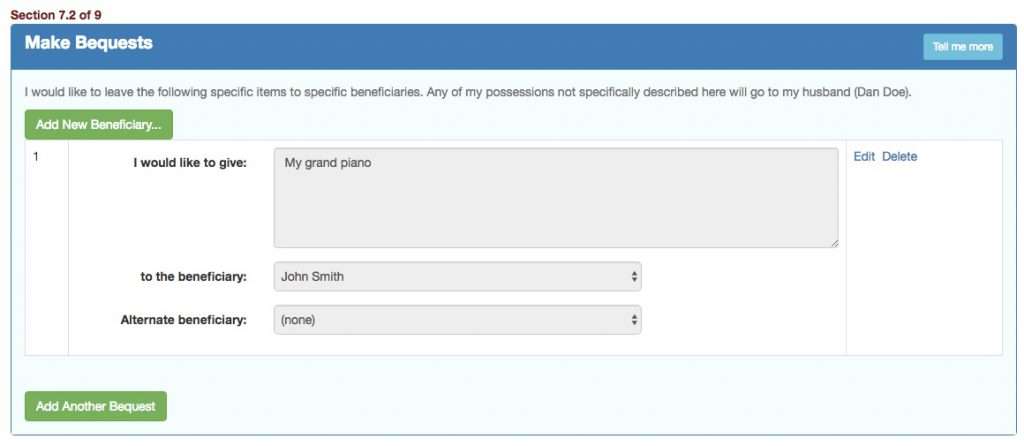
Specific gifts are individual items or dollar amounts left to named beneficiaries. Examples: “$10,000 to my sister Jane,” or “my wedding ring to my daughter Sarah.” These are distributed first, before the residual estate is divided. You can include as many specific gifts as you wish, to individuals or charities.
A beneficiary is anyone who receives from your estate. A trust protects minor assets until the beneficiary reaches their designated age which a trustee oversees. The person who becomes guardian for your minor children will take responsibility to care for them when both of their parents pass away. Your Will contains designations for all three elements.

You can include donations to registered charities as specific gifts or as a percentage of your residual estate. Charitable bequests generate donation tax credits on your final tax return; up to 100% of net income. For detailed data, see our planned giving guide.
What Clauses Are Included in a Canadian Will?

After debts, expenses, and specific gifts are paid, everything remaining is your residual estate. You distribute this by percentage among your primary beneficiaries (e.g., “50% to my spouse, 25% each to my two children”). You must also specify what happens if a primary beneficiary predeceases you, either their share goes to their children (per stirpes), is redistributed among surviving beneficiaries, or goes to a named alternate.
A properly drafted Canadian Will contains several standard clauses. Here is what each one does and why it matters.

If any beneficiary is a minor, the Will creates a trust to hold their inheritance until they reach a specified age (typically 18-25). A trustee manages the funds and can use them for the child’s education, healthcare, and living expenses. Without a trust, a court-appointed guardian of property manages the funds under restrictive court oversight.
1. Revocation Clause
If you have minor children, the Will names a guardian and alternate guardian to raise them if both parents die. Without this designation, a court decides, a process that takes time, involves social workers, and may not reflect your wishes.
The first clause in every Will states that all previous Wills and codicils are revoked. The document prevents people from getting confused about which version controls their estate distribution because it protects their current wishes from being overridden.

The signing process makes your Will legally binding. In most Canadian provinces:
- Print your completed Will.
- Sign at the end of the document in the presence of two adult witnesses.
- Both witnesses must be present simultaneously and watch you sign.
- Both witnesses sign in your presence and each other’s presence.
- Witnesses must not be beneficiaries or spouses of beneficiaries.
An Affidavit of Execution (a sworn statement from a witness confirming proper signing) is recommended but not required. It simplifies probate by eliminating the need to locate a witness after your death. LegalWills.ca provides an Affidavit template with every Will. Notarization is not required in common-law provinces.
2. Executor Appointment
- Store safely: Fireproof safe or with a trusted person. Tell your executor where it is.
- Consider registration: Some provinces offer registries. See our Will registration guide.
- Complete your estate plan: Add a Living Will and Power of Attorney.
- Document digital assets: Use LifeLocker to catalogue online accounts.
- Set up Keyholders: Notify trusted people about your documents.
- Review regularly: Update after marriage, divorce, births, deaths, or major asset changes.
This clause names your executor and alternate executor, and grants them the authority to manage your estate. The document includes wide-ranging authority which lets the trustee sell properties and handle financial investments and employ experts and distribute funds and oversee trust operations. The powers enable your executor to conduct standard estate management activities without requiring court approval.
LegalWills.ca has been Canada’s leading online Will service since 2000. For $49.95, you get a comprehensive, province-specific Last Will and Testament that includes all the clauses described above, clear signing instructions, an Affidavit of Execution template, and access to LifeLocker and Keyholders. The guided process takes about 20 minutes and explains every term as you go. Hundreds of thousands of Canadians have created their Will through our service. For more on why an online service beats Will kits and lawyers, explore our comparison guides.

Tim Hewson is one of the founders of LegalWills.ca.
He has over 20 years of experience helping people to write their Will and other estate planning documents. He has been interviewed by many of the major news media outlets including CTV, Global News, The Toronto Star, and other leading Canadian publications. He has also contributed to a number of financial planning books.
Throughout his career, Tim has written extensively on the subject of Will writing and estate planning.