
TL;DR
The best way to change your Will is to create a new one. A new Will automatically revokes all previous Wills when it contains the standard revocation clause. Do not handwrite changes on your existing Will, this can invalidate the entire document. A codicil (formal amendment) is an option but is outdated and not recommended. At LegalWills.ca, updating your Will is free and takes only a few minutes.
Originally published: September 29, 2021 | Last updated: November 26, 2025
If you need to change your Will, the recommended approach is to create a completely new Will. A properly drafted new Will contains a revocation clause that automatically cancels all previous Wills. This is simpler, safer, and more reliable than any other method of changing your Will. At LegalWills.ca, updating and reprinting your Will is free and takes approximately 10 minutes.
Can I Just Cross Out or Handwrite Changes on My Existing Will?
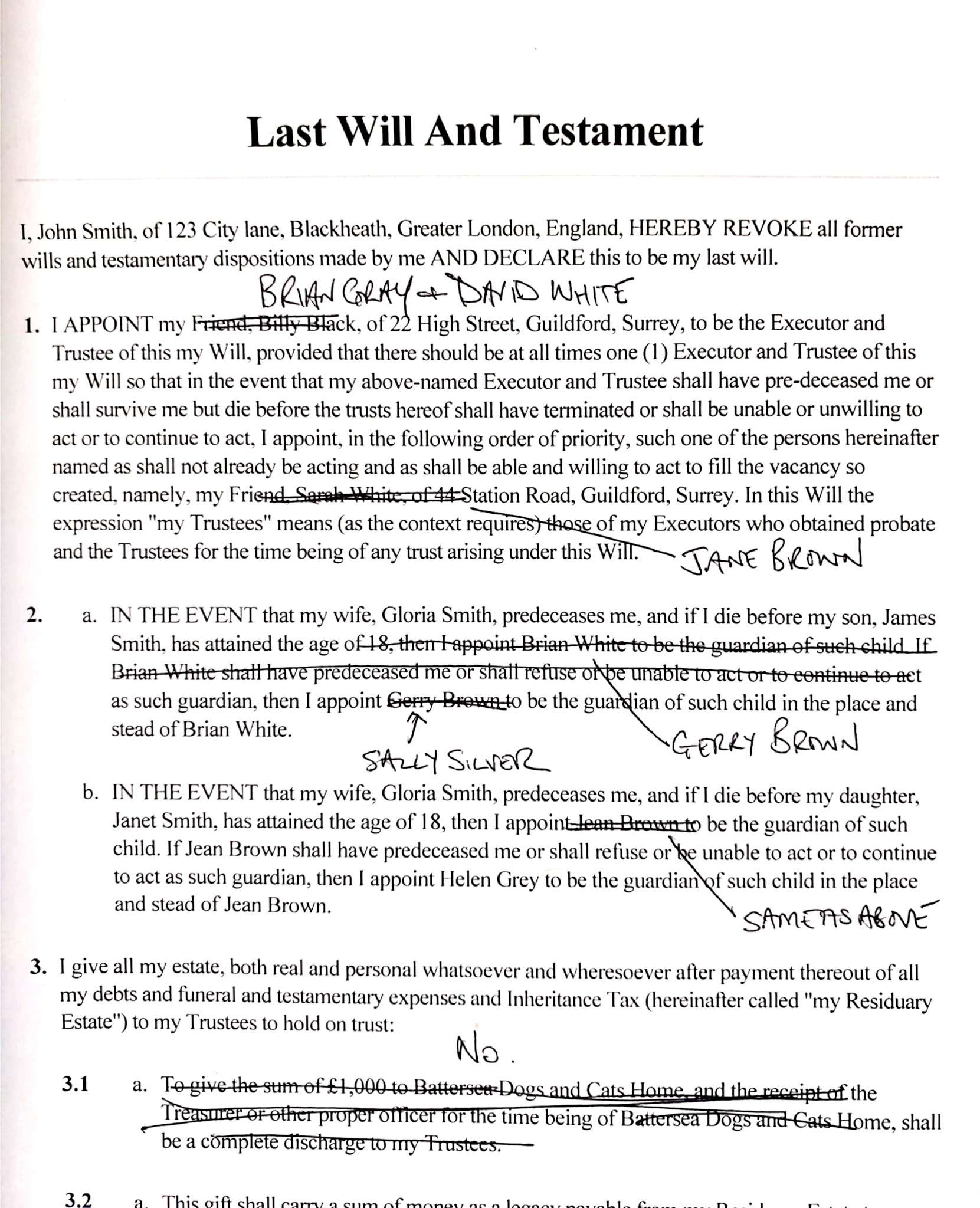
No, never handwrite changes on a signed Will. This is the most common mistake people make when trying to update their Will, and it can have serious consequences:
- The changes may be invalid: In most provinces, handwritten alterations made after signing are not legally effective unless they are initialled by the testator and both original witnesses, which rarely happens
- The entire Will may be invalidated: Courts may question whether the alterations indicate the testator intended to revoke the original Will, potentially leaving you intestate
- It creates grounds for a challenge: Any alteration raises questions about who made the change, when, and whether the testator had capacity at the time; opening the door to a Will contest
- It looks unprofessional: A Will with cross-outs and handwritten additions may not be taken seriously by banks, land registries, or other institutions that require the Will for asset transfers
The message is clear: do not alter a signed Will by hand. If you need to make changes, create a new Will.
What Is a Codicil and Should I Use One?
A codicil is a formal amendment to an existing Will. It is a separate legal document that modifies specific provisions of the original Will while leaving the rest intact. A codicil must be:
- In writing
- Signed by the testator
- Witnessed by two witnesses (same requirements as the original Will)
While codicils are legally valid, they are not recommended for several reasons:
| Codicil | New Will |
|---|---|
| Creates confusion, must be read alongside the original Will | Standalone document, clear and complete |
| Can contradict the original Will, creating ambiguity | Replaces the original entirely, no ambiguity |
| Both documents must be found and submitted for probate | Only one document needed |
| Multiple codicils compound confusion | Always current and complete |
| Requires same signing formalities as a new Will | Same signing formalities, no harder than a codicil |
Since a codicil requires the same formalities as a new Will (signing, witnessing) and creates potential complications, there is no practical advantage to using one. A new Will is always the better option.
How Do I Create a New Will to Replace My Old One?
The process depends on how your original Will was created:
If your original Will was created at LegalWills.ca:
- Log in to your account at LegalWills.ca
- Make the necessary changes to your Will
- Print the updated Will
- Sign and have it witnessed, the same two-witness requirement applies
- Destroy the old signed Will (shred or burn it)
- Store the new Will securely and inform your executor
This process is free at LegalWills.ca, there is no charge to update your Will.
If your original Will was created by a lawyer:
- You can return to the same lawyer (fees will apply; typically $200–$500+ for updates)
- You can create a new Will through LegalWills.ca, the new Will automatically revokes the lawyer-drafted Will
- Inform the lawyer that a new Will has been created so they can update their records
When Should I Change My Will?
Review and update your Will whenever any of these events occur:
- Marriage; in most common law provinces, marriage automatically revokes your Will, so a new Will is essential
- Divorce; provisions naming your ex-spouse are typically voided, but the rest of the Will may not reflect your new circumstances
- Birth or adoption of a child, you may need to add a guardian appointment and update your distribution plan
- Death of a beneficiary or executor, your backup plans may need updating
- Significant change in assets, buying or selling property, receiving an inheritance, major investments
- Moving to a different province, provincial laws differ on execution requirements and intestacy rules
- Change in relationships, new partner, estrangement, reconciliation
At minimum, review your Will every 3–5 years even if no major changes have occurred. For more detail, see our guide on updating a Will.
What Happens to My Old Will When I Create a New One?
A properly drafted new Will includes a clause stating: “I revoke all previous Wills and codicils.” This automatically cancels every previous Will and codicil. However, best practice is to also:
- Physically destroy the old Will, shred or burn all copies of the previous signed Will
- Notify anyone who held a copy, if your lawyer, executor, or family member has a copy of the old Will, inform them it has been replaced
- Update your Will registration, if registered with the Canada Will Registry, update the record
Destroying the old Will prevents any confusion if both documents are found after your death.
Frequently Asked Questions
How much does it cost to change a Will?
At LegalWills.ca, updating your Will is free; unlimited updates are included. If using a lawyer, updates typically cost $200–$500+. See our cost of a Will guide for details.
Can I change my executor without rewriting the entire Will?
Technically, you could use a codicil to change just the executor. But it is better to create a new Will, it takes the same amount of effort (signing and witnessing) and produces a cleaner, more reliable document.
Does my new Will need to be signed by the same witnesses?
No. Any two eligible adults can serve as witnesses. They do not need to be the same people who witnessed the original Will.
What if I made my Will with a different online service or a lawyer?
You can create a new Will at LegalWills.ca regardless of how your previous Will was prepared. The new Will revokes all previous Wills automatically.

Tim Hewson is one of the founders of LegalWills.ca.
He has over 20 years of experience helping people to write their Will and other estate planning documents. He has been interviewed by many of the major news media outlets including CTV, Global News, The Toronto Star, and other leading Canadian publications. He has also contributed to a number of financial planning books.
Throughout his career, Tim has written extensively on the subject of Will writing and estate planning.