
Originally published: May 22, 2015 | Last updated: December 4, 2024
TL;DR: Estate planning uses specialized terminology that can be confusing for non-lawyers. This guide defines every key term you need to know before writing your Will: intestate, estate, Last Will and Testament, Living Will, Power of Attorney, executor, beneficiary, guardian, trust, witnesses, notarizing, and probate. Understanding these terms ensures you make informed decisions about your estate plan.
A person dies without having created a legal Will when they enter into intestate status. Canadian law distributes intestate estates through provincial succession regulations which become active when someone passes away without a Will. The legislation establishes a fixed formula which determines the outcome of these cases through different provincial systems. Intestate succession creates unexpected outcomes for family members because surviving spouses lose their right to receive everything and common-law partners obtain no benefits and friends together with charities receive no inheritance. The entire purpose of writing a Will is to avoid dying intestate. For a detailed look at what happens, see our article on dying without a Will in Canada.
“Intestate” means dying without a valid Will. When someone dies intestate in Canada, provincial succession laws determine how their estate is distributed. The deceased has no say in the outcome, the formula is fixed by legislation and varies by province. Intestate succession often produces results that surprise families: a surviving spouse may not inherit everything, common-law partners may receive nothing, and friends and charities are excluded entirely. The entire purpose of writing a Will is to avoid dying intestate. For a detailed look at what happens, see our article on dying without a Will in Canada.

What Is an “Estate”?
Your estate is everything you own at the time of your death: real property (house, land), personal property (vehicles, furniture, jewelry), financial assets (bank accounts, investments, retirement savings), digital assets (online accounts, cryptocurrency), and any debts or obligations. Your estate also includes life insurance proceeds payable to your estate (though policies with named beneficiaries bypass the Will). When you write a Will, you are providing instructions for how your entire estate should be managed and distributed after your death.
Your estate consists of all your possessions at death including real property which covers houses and land and personal property which includes vehicles and furniture and jewelry and financial assets which consist of bank accounts and retirement savings and investments and any debts or obligations. Your estate also includes life insurance proceeds payable to your estate (though policies with named beneficiaries bypass the Will). The purpose of a Will-writing document enables you to create directions which explain how your complete estate should receive management and distribution after death.
A Last Will and Testament is a legal document that specifies how your estate should be distributed after your death, who should manage the process (your executor), and who should care for your minor children (your guardian). It only takes effect after you die. The word “last” signifies that the most recent valid Will supersedes all previous versions. In Canada, a Will must be in writing, signed by the testator (the person making the Will), and witnessed by two adults who are not beneficiaries. Learn how to write your Will step by step.

What Is a Last Will and Testament?
A Living Will (also called an advance healthcare directive, personal directive, or representation agreement) is a document that records your medical treatment preferences for situations where you cannot communicate. It covers decisions about life-sustaining treatment, resuscitation, artificial nutrition, pain management, and organ donation. A Living Will operates while you are alive but incapacitated, it has no authority after death. It is completely separate from your Last Will and Testament. For more details, see where the Living Will fits in your estate plan.
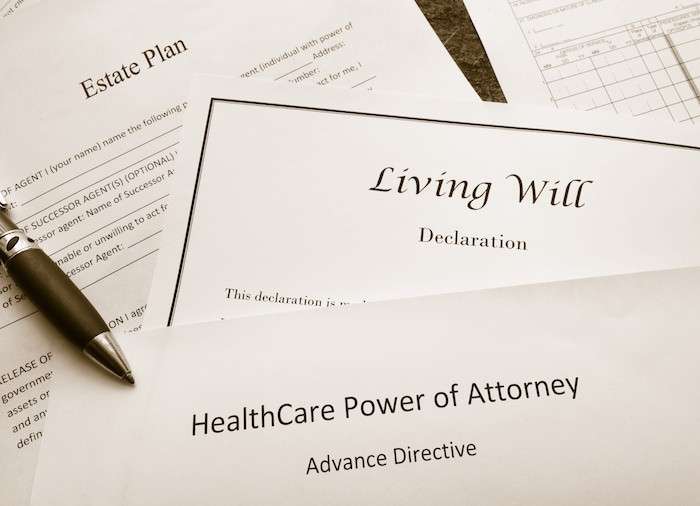
A Last Will and Testament functions as a legal document which lets you decide how your assets will distribute after death while naming an executor to handle estate matters and a guardian to protect your children under age 18. It only takes effect after you die. The last valid Will document replaces all previous versions according to the term “last”. In Canada, a Will must be in writing, signed by the testator (the person making the Will), and witnessed by two adults who are not beneficiaries. Learn how to write your Will step by step.
A Power of Attorney is a legal document that authorizes someone (your “attorney” or “agent”) to make decisions on your behalf if you become incapacitated. There are two main types: a Power of Attorney for Property/Finances (managing your bank accounts, paying bills, handling investments) and a Power of Attorney for Personal Care/Healthcare (making medical decisions). Unlike a Will, a Power of Attorney operates during your lifetime. It becomes void when you die. Together with your Will and Living Will, it forms the three pillars of a complete estate plan. Read more about advance directive terminology.
What Is a Living Will?
An estate plan is the complete set of legal documents and arrangements that protect you and your family both during your lifetime and after your death. A comprehensive Canadian estate plan includes three core documents: a Last Will and Testament, a Power of Attorney, and a Living Will. It may also include beneficiary designations on insurance policies and retirement accounts, trusts, and plans for business succession. Estate planning is not just for the wealthy, every adult with any assets, dependants, or preferences about their medical care needs an estate plan.
A Living Will (also called an advance healthcare directive, personal directive, or representation agreement) is a document that records your medical treatment preferences for situations where you cannot communicate. The document establishes rules which determine how doctors should treat patients with life-threatening conditions and how they should handle resuscitation and artificial feeding and pain relief and organ transplantation. A Living Will operates while you are alive but incapacitated, it has no authority after death. The document exists as an independent entity which does not connect to your Last Will and Testament. For more details, see where the Living Will fits in your estate plan.
An executor (also called a personal representative, estate trustee, or liquidator in Quebec) is the person you name in your Will to manage your estate after your death. Their responsibilities include locating and securing your assets, paying your debts and taxes, filing your final tax returns, applying for probate if necessary, and distributing your estate to your beneficiaries according to your Will. Being an executor is a significant responsibility that can take months or even years for complex estates. Choose someone you trust who is organized, responsible, and willing to serve. Always name an alternate executor in case your first choice cannot act.

What Is a Power of Attorney?
A beneficiary is any person, organization, or charity that receives something from your estate through your Will. Beneficiaries can receive specific items (a piece of jewelry, a vehicle), specific dollar amounts, percentages of your estate, or your entire residual estate (everything left after debts, taxes, and specific gifts). You can name as many beneficiaries as you wish and should always designate alternate beneficiaries in case a primary beneficiary predeceases you. To include a charity, see our guide to planned giving in Canada.
A Power of Attorney serves as a legal instrument which lets you choose someone to handle your affairs when you lose the ability to make decisions. There are two main types: a Power of Attorney for Property/Finances (managing your bank accounts, paying bills, handling investments) and a Power of Attorney for Personal Care/Healthcare (making medical decisions). A Power of Attorney functions separately from a Will because it stays active throughout your entire life. The agreement ends when you pass away. Together with your Will and Living Will, it forms the three pillars of a complete estate plan. Read more about advance directive terminology.
A guardian is the person you designate in your Will to raise your minor children if both parents die. This is one of the most critical provisions in any Will for parents. Without a guardian designation, a court decides who raises your children, and the outcome may not align with your values or wishes. Discuss guardianship with your chosen person before naming them, choose an alternate guardian, and consider factors like parenting philosophy, financial stability, location, and the relationship with your children.
What Is an Estate Plan?
A trust is a legal arrangement within your Will that holds assets on behalf of a beneficiary, typically a minor child, until they reach a specified age. The trustee (often the same person as the executor, but not necessarily) manages the trust funds and can use them for the beneficiary’s education, healthcare, and living expenses. Without a trust, a minor who inherits directly would have their inheritance managed by a court-appointed guardian of property, a process that is costly and inflexible. Setting a trust age (commonly 18, 19, or 21) is a standard and recommended part of writing a Will.
An estate plan contains all legal documents and arrangements which defend your family and you from the present until after your death. A Canadian estate plan needs three essential documents which include a Last Will and Testament and a Power of Attorney and a Living Will. The document should contain insurance policies and retirement accounts plus trusts and business succession plans together with beneficiary information. Estate planning exists to serve people who do not need to possess large amounts of money because every person who has assets and children or medical treatment choices should create an estate plan.
Witnesses are adults who observe you signing your Will and then sign the document themselves to confirm they saw you do so. In most Canadian provinces, a formal Will requires two witnesses who are both present at the same time. Witnesses must be adults (18 or older) and must not be beneficiaries or spouses of beneficiaries named in the Will, if they are, their gift may be voided. Witnesses do not read the Will or know its contents; they simply confirm that you signed it voluntarily and appeared to be of sound mind. Proper witnessing is essential, a Will without valid witnesses can be declared invalid and challenged in court.

What Is an Executor?
No. In common-law Canadian provinces (all provinces except Quebec), a Will does not need to be notarized to be legally valid. Notarization is simply a notary public confirming the identity of the person signing the document, it adds no legal weight to a Will that is already properly signed and witnessed. In Quebec, one of the three accepted Will formats is a “notarial Will” prepared and retained by a notary, which has the advantage of not requiring probate. But outside Quebec, notarization is unnecessary and many people waste money notarizing their Wills based on a misconception. For more on what makes a Will valid, see ten myths about Canadian Wills.
The person whom you appoint in your Will to handle your estate after death becomes your executor who also functions as a personal representative and estate trustee and liquidator in Quebec. The executor must find your assets while protecting them from harm and they need to handle your financial responsibilities and tax obligations and submit your final tax documentation and obtain probate authorization when needed and distribute your assets according to your Will to your beneficiaries. The role of executor requires someone to take on major duties which might stretch through many months or even several years when dealing with complicated estates. Choose someone you trust who is organized, responsible, and willing to serve. You need to select a backup executor who should take over if your main executor becomes unable to perform the job.
Probate is the legal process by which a court validates your Will after your death. The court confirms that the Will is genuine, was properly executed, and is the deceased’s last Will. Once probate is granted (called a “Certificate of Appointment of Estate Trustee” in Ontario, or “Grant of Probate” in other provinces), the executor has legal authority to manage the estate. Probate fees vary by province, some charge a flat fee, others charge a percentage of the estate value. Not all estates require probate, but financial institutions often require it before releasing large assets. Probate is a separate process from estate administration and typically takes several weeks to several months.
What Is a Beneficiary?
| A beneficiary is any person, organization, or charity that receives something from your estate through your Will. You can choose specific items to give to beneficiaries including jewelry and vehicles and you can also distribute specific dollar amounts and percentages of your estate and your entire residual estate which includes all remaining assets after debts and taxes and specific gifts have been deducted. You can name as many beneficiaries as you wish and should always designate alternate beneficiaries in case a primary beneficiary predeceases you. To include a charity, see our guide to planned giving in Canada. | What Is a Guardian? |
|---|---|
| The person you choose in your Will to care for your children under age 18 becomes their guardian if both parents pass away. This is one of the most critical provisions in any Will for parents. A court will decide who should raise your children when you do not designate a guardian but this decision process will probably produce results which contradict your personal beliefs and desires. Discuss guardianship with your chosen person before naming them, choose an alternate guardian, and consider factors like parenting philosophy, financial stability, location, and the relationship with your children. | What Is a Trust in a Will? |
| A trust functions as a legal structure which your Will contains to protect assets for the benefit of minor children until they reach the age which you set. The trustee who usually serves as the executor but does not have to be so manages the trust funds which they can spend to support the beneficiary’s educational needs and medical care and basic living costs. Without a trust, a minor who inherits directly would have their inheritance managed by a court-appointed guardian of property – a process that is costly and inflexible. The trust age needs to be established between 18 and 21 years old during the Will development process because this practice serves as a standard recommendation. | What Are Witnesses and Why Are They Required? |
| Witnesses need to be adults who observe your Will signing process before they sign the document to verify they saw you complete the signing. Most Canadian provinces require two witnesses to sign a formal Will after they have witnessed each other throughout the entire signing process. Witnesses must be adults (18 or older) and must not be beneficiaries or spouses of beneficiaries named in the Will – if they are, their gift may be voided. Witnesses do not read the Will or know its contents; they simply confirm that you signed it voluntarily and appeared to be of sound mind. Proper witnessing serves as a necessary requirement because courts will declare a Will invalid when it lacks proper witness signatures which makes the document vulnerable to legal disputes. | Does a Will Need to Be Notarized? |
| The answer is no. A Will does not need to be notarized for legal validity in common-law Canadian provinces which include all provinces except Quebec. The process of notarization requires a notary public to prove document signer identity but it does not create additional legal power for a Will which already contains proper signatures and witness marks. Quebec recognizes three Will formats which include the notarial Will that a notary prepares and preserves without needing probate for implementation. But outside Quebec, notarization is unnecessary and many people waste money notarizing their Wills based on a misconception. The document “Ten Myths about Canadian Wills” contains information about what makes a Will valid. | What Is Probate? |
| Probate serves as the legal process through which courts verify your Will after you pass away. The court confirms that the Will is genuine, was properly executed, and is the deceased’s last Will. The executor receives legal authority to handle the estate after courts approve probate through their issuance of the “Certificate of Appointment of Estate Trustee” in Ontario and “Grant of Probate” across other Canadian provinces. Probate fees vary by province – some charge a flat fee, others charge a percentage of the estate value. Not all estates require probate, but financial institutions often require it before releasing large assets. The estate administration process follows probate which usually needs between four weeks and six months to reach completion. | Quick Reference: Estate Planning Glossary |
| Term | Definition |
| Intestate | Dying without a valid Will |
| Estate | Everything you own at the time of death |
| Last Will and Testament | Legal document specifying how your estate is distributed after death |
| Living Will | Document recording your healthcare preferences if incapacitated |
| Power of Attorney | Authorizes someone to make decisions on your behalf if incapacitated |
| Executor | Person named to manage your estate after death |
| Beneficiary | Person or organization that receives from your estate |
Ready to put these terms into practice? Create your Will today at LegalWills.ca, the guided process explains each concept as you go. Start with our step-by-step Will-writing guide, or read about why every Canadian needs a Will.

Tim Hewson is one of the founders of LegalWills.ca.
He has over 20 years of experience helping people to write their Will and other estate planning documents. He has been interviewed by many of the major news media outlets including CTV, Global News, The Toronto Star, and other leading Canadian publications. He has also contributed to a number of financial planning books.
Throughout his career, Tim has written extensively on the subject of Will writing and estate planning.