Originally published: August 31, 2016 | Last updated: January 29, 2025
TL;DR: A Will is legally valid in Canada when it is in writing, signed by the testator, and witnessed by two adults who are not beneficiaries. An Affidavit of Execution is a sworn statement by a witness confirming the signing was done properly – it is not required for the Will to be valid, but it simplifies probate by eliminating the need to locate a witness later. Notarization is not required. You do not need a lawyer to make your Will legal.
Yes. Canadian law does not require a lawyer to prepare your Will. You can create your own Will through three different approaches which include working with an estate planning lawyer and using paper-based Will kits and online services like LegalWills.ca. All three methods can produce legally valid documents. A Will becomes legally binding when it follows the signing and witnessing requirements from your home province.
Yes. Canadian law does not require a lawyer to prepare your Will. You can write your own Will using any of three methods: working with an estate planning lawyer, using a paper-based Will kit, or using an interactive online Will service like LegalWills.ca. All three methods can produce legally valid documents. What matters is not who prepared the Will, but whether it meets your province’s execution requirements, specifically, the signing and witnessing process.
What Is the Correct Process for Signing a Will?
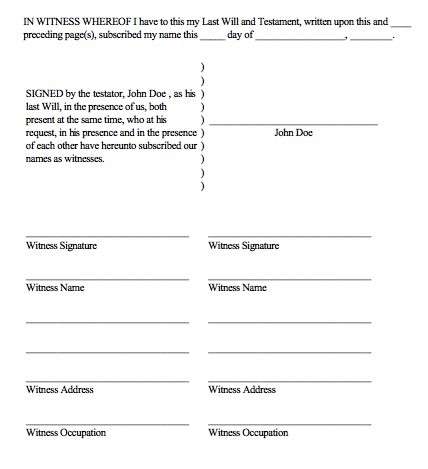
The signing process is the single most critical step in making your Will legal. In most Canadian provinces, a valid Will requires:
- The Will must be in writing (typed or handwritten).
- The testator (you) must sign the Will at the end of the document, or direct someone to sign on your behalf in your presence.
- Two adult witnesses must be present at the same time and watch you sign.
- Both witnesses must then sign the Will in your presence and in the presence of each other.
- Witnesses must not be beneficiaries named in the Will, nor spouses of beneficiaries.
If any of these requirements are not met, the Will may be declared invalid and your estate could be distributed under intestate succession laws. This is the most common reason Wills are successfully challenged in court.
The signing process establishes the essential legal foundation which makes your Will an official document. In most Canadian provinces, a valid Will requires:
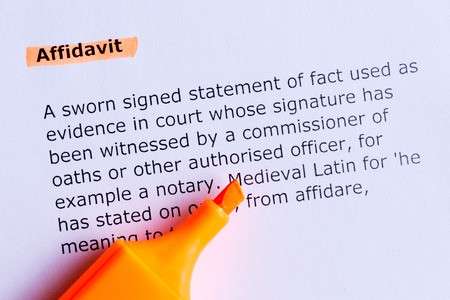
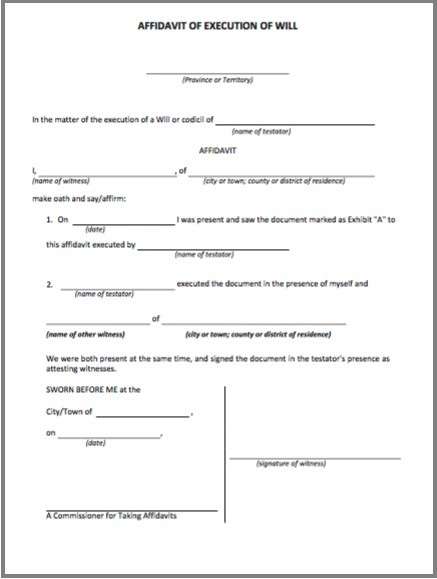
An Affidavit of Execution is a sworn statement made by one of the witnesses to your Will, confirming that the signing process was carried out correctly. The witness swears before a commissioner of oaths (or notary public) that they saw you sign the Will, that you appeared to be of sound mind, and that the proper formalities were followed. The Affidavit is typically attached to the Will.
Important: An Affidavit of Execution is not required for the Will to be legally valid. However, it significantly simplifies the probate process. Without an Affidavit, the court must locate one of the original witnesses to confirm the Will was properly signed, a process that can be difficult or impossible if years have passed and witnesses have moved, become incapacitated, or died. With an Affidavit already attached, this step is eliminated.
The Will must be in writing (typed or handwritten).
No. In all common-law Canadian provinces, notarization is not required for a Will to be legally valid. A properly signed and witnessed Will has full legal force without any notarization. Many Canadians waste money notarizing their Wills based on a misconception. The exception is Quebec, where one of the three accepted Will formats, the notarial Will, is prepared and retained by a notary, which has the advantage of not requiring probate. For more on this topic, see ten myths about Canadian Wills.
The testator (you) must sign the Will at the end of the document, or direct someone to sign on your behalf in your presence.
- Store the original safely: Keep it in a fireproof safe at home, or with a trusted person. Avoid safety deposit boxes in some provinces, as access after death can be restricted.
- Tell your executor: Your executor must know a Will exists and exactly where to find it. A Will that cannot be located is treated as if it does not exist.
- Keep copies: Give copies to your executor and keep one with your important documents. Mark copies clearly as “COPY”, only the original should be presented for probate.
- Consider registration: Some provinces offer Will registries. See our guide on how to register a Will.
- Use Keyholders: LegalWills.ca’s Keyholders feature notifies designated people about the existence and location of your Will.
- Complete your estate plan: Alongside your Will, prepare a Living Will and Power of Attorney.
Two adult witnesses need to watch you sign when they stand together as you perform the act.
After your death, your executor locates the original Will and applies for probate (if required). The court validates the Will, grants the executor legal authority, and the executor begins administering your estate; paying debts, filing taxes, and distributing assets to beneficiaries. The Affidavit of Execution, if attached, streamlines the probate application by confirming the Will was properly signed. Without probate, most financial institutions will not release assets. The entire process typically takes several months for simple estates. For more on the executor’s role, see our complete executor guide.
Ready to create a legally valid Will? LegalWills.ca provides clear signing instructions specific to your province, plus an Affidavit of Execution template. Start with our step-by-step guide.

Tim Hewson is one of the founders of LegalWills.ca.
He has over 20 years of experience helping people to write their Will and other estate planning documents. He has been interviewed by many of the major news media outlets including CTV, Global News, The Toronto Star, and other leading Canadian publications. He has also contributed to a number of financial planning books.
Throughout his career, Tim has written extensively on the subject of Will writing and estate planning.