
Originally published: April 16, 2019 | Last updated: June 4, 2025
TL;DR: A Power of Attorney (PoA) is a legal document that appoints someone to manage your financial or healthcare decisions if you lose mental capacity. Canada has two main types: a Financial Power of Attorney (for banking, property, investments) and a Healthcare Power of Attorney (for medical decisions). You must have mental capacity when you sign it, and it must be witnessed. Every Canadian adult needs a PoA as part of their estate plan, without one, your family must apply to the courts for authority to act on your behalf, a process that costs thousands of dollars and takes months.
A Financial Power of Attorney appoints someone to manage your financial affairs while you are alive, typically after you have lost mental capacity. This document is distinct from a Last Will and Testament (which takes effect after death) and a Living Will (which addresses healthcare decisions and advance directives). Together, these three documents form a complete estate plan in Canada.

What Types of Power of Attorney Exist in Canada?
There are two primary types of Power of Attorney in Canada:
| Type | Purpose | Also Known As |
|---|---|---|
| Healthcare Power of Attorney | Appoints someone to make medical and healthcare decisions on your behalf | Healthcare Proxy, Representation Agreement (BC), Personal Directive (AB) |
| Financial Power of Attorney | Appoints someone to manage your finances, property, banking, and investments | Continuing Power of Attorney, Enduring Power of Attorney, Mandate (QC) |
The Healthcare Power of Attorney names a person (your healthcare proxy) to make medical decisions when you cannot communicate your own wishes. This person has the authority to accept or reject medical treatments while selecting medical facilities and obtaining complete access to your health information. This document exists as a single unit which combines an Advance Directive that specifies your medical treatment choices.
The Financial Power of Attorney allows your chosen attorney to perform banking operations and bill payments and investment management and property sales and tax return filing and all other financial activities you need. The term “attorney” in this document refers to your designated representative who does not require legal qualifications.
Each province uses different terminology for these documents, but the underlying purpose is the same across Canada. For a guide to provincial terminology, see our article on advance care terminology.
Is a Power of Attorney as Important as a Will?
Yes – in many ways, a Power of Attorney is more urgent than a Will. The execution of a Will begins after death but a Power of Attorney becomes necessary when someone needs help with decisions because they lack ability to decide. Your family members will face major operational problems because you do not have a PoA.
- Banking access – your spouse or children cannot access your bank accounts to pay your bills, mortgage, or care costs
- Property transactions – if your name is on the family home, your spouse cannot sell it without your signature. The house remains unsellable because you lack mental capacity until you either die or a court orders someone to take control.
- Investment management – no one can manage, rebalance, or access your investment accounts
- Government benefits – no one can apply for or manage disability benefits, CPP, or OAS on your behalf
Your family needs to start court proceedings for guardianship and committee appointment because you lack Power of Attorney. The court process requires 3 to 6 months to complete while legal fees range between $2,000 and $10,000+. Your bank accounts and assets will become unavailable for use during this period.
You and your spouse share ownership of your home property. Your spouse would need to sell your house because they want to move into a smaller home when you develop dementia or when you suffer a stroke. But wait…they can’t do this without a Financial Power of Attorney because both signatures must appear on the deed. Your spouse would be stuck in the family home, unable to sell until you pass away.
A Power of Attorney prevents these situations entirely. Every Canadian adult needs to have this document available regardless of their age or medical condition.

Who Determines Your Mental Capacity?
Two important conditions must be met for a Power of Attorney to function properly:
- You must have mental capacity when the PoA is signed – this is typically confirmed by the two independent witnesses who observe your signature
- The document becomes active when you lose your ability to make decisions which a medical professional must confirm through assessment.
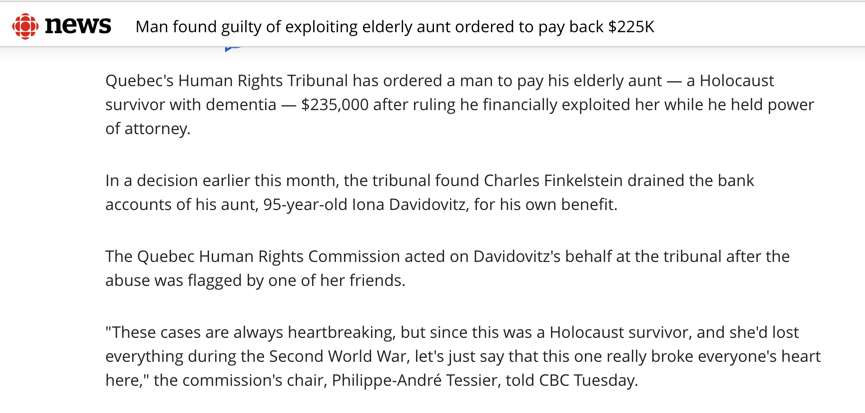
Power of Attorney abuse exists as a documented major problem which affects Canadian society. The person you appoint as your attorney has significant authority over your finances or healthcare decisions. Choose someone you trust completely – ideally a family member or close friend who understands your values and has no conflicts of interest.

How Can I Create a Power of Attorney in Canada?
There are three ways to create a Power of Attorney in Canada:
- Your lawyer will create the document through written instructions which you provide to them during the drafting process. Cost: $200–$500 per document, often bundled with a Will
- The online interactive service platform LegalWills.ca provides step-by-step guidance to help users through the creation process. Cost: $49.95 for a Power of Attorney
- DIY template – a blank form you fill in yourself. Cost: $15–$35, but carries significant risk of errors
The document needs to have correct signatures and witness marks before it can receive legal validation. At LegalWills.ca, you can create a comprehensive Power of Attorney in approximately 20 minutes as part of your complete estate plan.
Who Can Witness the Signing of a Power of Attorney?
The witnessing requirements for a Power of Attorney vary by province, but the general rules are:
- You need two adult witnesses who are present when you sign the document
- Witnesses must be at least 18 years old and mentally competent
- Witnesses cannot be the person you are appointing as your attorney, their spouse, your spouse, or anyone under 18
- Witnesses have no requirement to read the document because they serve to prove you signed voluntarily while understanding the contents of your signature. The signing process works through these steps:
Initial each page in the bottom left corner
- Sign your full name on the last page in view of both witnesses
- Each witness then initials each page and signs the last page
- Everyone must remain present until all signing is complete
- You need to use blue ink for signing the original document because it creates an easy way to tell original documents from their photocopies. You should avoid signing photocopies because this practice creates duplicate original documents which will result in administrative problems. Readers can refer to our guide for signing and witnessing legal documents to learn about the signing process.
Does a Financial Power of Attorney Need to Be Notarized?
The short answer: not legally required in most provinces, but practically recommended.
The legal requirement for a Power of Attorney is that it is signed in the presence of two witnesses. Most Canadian provinces do not require legal notarization for documents. However, there is a practical reason to have your PoA notarized: financial institutions (banks, investment companies) are more likely to accept a notarized document without additional verification.
Banks maintain Power of Attorney documents with caution because these documents enable their holders to conduct fraudulent operations. A notarized PoA serves as an extra verification document which enables your attorney to obtain required authority through the quickest possible method. The cost of notarization is typically $25–$75 – a worthwhile investment for the added convenience.
In Quebec, a Power of Attorney (called a “Mandate”) must be notarized to avoid the need for court homologation (validation) after incapacity.
What Should I Do with My Power of Attorney Once It Is Signed?

After signing your Power of Attorney, take these steps:
Protect the original document by storing it in a secure location which should not be a safety deposit box because your attorney might face access restrictions. A fireproof home safe or your attorney’s possession are good options
- Your appointed attorney needs to know about the existence of this document together with its exact storage location.
- Financial institutions require you to provide PoA copies because some banks let you register these documents before they become useful in the future.
- Tell your family – your family members should know who you have appointed and how to reach them
- Secure online storage of information becomes possible through services like LifeLocker which LegalWills.ca offers for digital document storage.
- Can I Revoke a Power of Attorney?
Yes, you can revoke a Power of Attorney at any time, provided you still have mental capacity. To revoke a PoA:
Create a written revocation document stating that the previous PoA is revoked
- Notify your appointed attorney in writing
- You need to inform all financial institutions and organizations which possess your original PoA document about this change.
- Destroy all copies of the revoked document
- A new Power of Attorney automatically revokes any previous PoA that appoints a different attorney for the same purpose. Creating an updated PoA through LegalWills.ca is the simplest way to replace an outdated document.
Frequently Asked Questions About Power of Attorney in Canada
What Happens If I Do Not Have a Power of Attorney?
Your family members need to seek court approval for guardianship and committee appointment because you do not have a PoA during your mental capacity loss. The process requires $2,000–$10,000+ in legal fees and takes 3–6 months to complete while your finances remain under court control. Your bank accounts and assets will become unavailable for use during this period.
Can My Spouse Automatically Act on My Behalf?
No. Being married does not give your spouse legal authority over your finances or medical decisions. A Power of Attorney is required even for married couples. Without one, your spouse cannot access your individual bank accounts, sell jointly owned property, or make healthcare decisions on your behalf.
When Should I Create a Power of Attorney?
Now. A Power of Attorney can only be created while you have mental capacity. The document becomes unusable because you lost your ability to sign after you needed it most. Every Canadian adult over 18 should have both a Financial and Healthcare Power of Attorney in place.
How Much Does a Power of Attorney Cost?
A Power of Attorney prepared by a lawyer costs $200–$500. At LegalWills.ca, a Power of Attorney costs $49.95, or $99.95 as part of a complete estate plan bundle that includes a Will, Power of Attorney, and Living Will. See our complete cost guide for details.
Is a Power of Attorney Valid Across Provinces?
Generally, yes. A Power of Attorney created in one province is typically recognized in other provinces, though the terminology and specific requirements differ. If you move to a new province, it is advisable to create a new PoA that complies with local legislation.
Generally, yes. A Power of Attorney created in one province is typically recognized in other provinces, though the terminology and specific requirements differ. If you move to a new province, it is advisable to create a new PoA that complies with local legislation.

Tim Hewson is one of the founders of LegalWills.ca.
He has over 20 years of experience helping people to write their Will and other estate planning documents. He has been interviewed by many of the major news media outlets including CTV, Global News, The Toronto Star, and other leading Canadian publications. He has also contributed to a number of financial planning books.
Throughout his career, Tim has written extensively on the subject of Will writing and estate planning.