TL;DR
If you own assets in multiple countries, a single Canadian Will may not cover everything. The Expat Will service from LegalWills allows you to create separate, legally valid Wills for assets in different jurisdictions, including the US, UK, and other countries. Each Will covers only the assets in that specific country, avoiding conflicts between legal systems. There is no truly universal “International Will” that works everywhere.
Originally published: March 26, 2021 | Last updated: October 15, 2025
A Canadian Will typically covers assets located in Canada. If you own property, bank accounts, investments, or other assets in another country, you need a separate Will for each jurisdiction where you hold assets. The Expat Will service from LegalWills makes it possible to create jurisdiction-specific Wills that work together as a coordinated estate plan; ensuring your global assets are distributed according to your wishes without creating legal conflicts between countries.

Why Do You Need Multiple Wills for Assets in Different Countries?
Every country has its own succession laws, the rules governing how assets are distributed after death. These laws differ significantly in areas such as:
- Forced heirship: Some countries (particularly in Europe and the Middle East) require that a certain percentage of the estate go to specific family members, regardless of what the Will says
- Probate requirements: Each country has its own probate or estate administration process. A Canadian Will must go through local probate in the foreign country, which can be slow, expensive, and complicated
- Execution formalities: The number of witnesses, notarization requirements, and other signing formalities vary by jurisdiction
- Tax implications: Estate taxes, inheritance taxes, and capital gains taxes on death vary dramatically between countries
A single Canadian Will that attempts to cover foreign assets creates several problems: it must be probated in each country where you own assets (requiring certified translations, apostilles, and foreign legal counsel), and its provisions may conflict with mandatory local laws.
Is There an “International Will” That Works Everywhere?
No; despite the name, there is no single “International Will” that is universally recognized in every country. The UNIDROIT Convention of 1973 (the Washington Convention) created a standardized form called the “International Will,” but:
- Only about 12 countries have ratified the Convention
- Canada has ratified it, but implementation varies by province
- The United States has ratified it, but not all states have enacted implementing legislation
- The UK has not ratified it
- Many countries with significant Canadian expatriate populations have not signed
Even in countries that have ratified the Convention, the International Will form does not override local succession laws. It standardizes the execution formalities (how the Will is signed and witnessed) but does not address the substantive content, meaning forced heirship rules, community property regimes, and other local requirements still apply.
The practical solution is to create a separate Will for each country where you hold significant assets, with each Will drafted to comply with that country’s specific legal requirements.
What Is the Challenge of Preparing Multiple Wills?

Creating multiple Wills for different jurisdictions presents several challenges:
- Revocation risk: The most critical issue. A standard Will typically contains a clause revoking all previous Wills. If your US Will revokes all previous Wills, it could inadvertently revoke your Canadian Will. Each Will must be carefully drafted to revoke only the previous Will for that specific jurisdiction.
- Coordination: The Wills must work together. Asset boundaries must be clear, each Will should specify exactly which assets it covers (e.g., “all assets located in the United States” or “all assets located in Canada”).
- Legal expertise: Drafting a Will that complies with foreign law requires knowledge of that jurisdiction’s succession law, tax law, and execution formalities. Most Canadian lawyers are not qualified to draft Wills for foreign jurisdictions.
- Cost: Using lawyers in multiple countries to draft coordinated Wills can cost thousands of dollars per jurisdiction.
How Does the Expat Will Service Work?

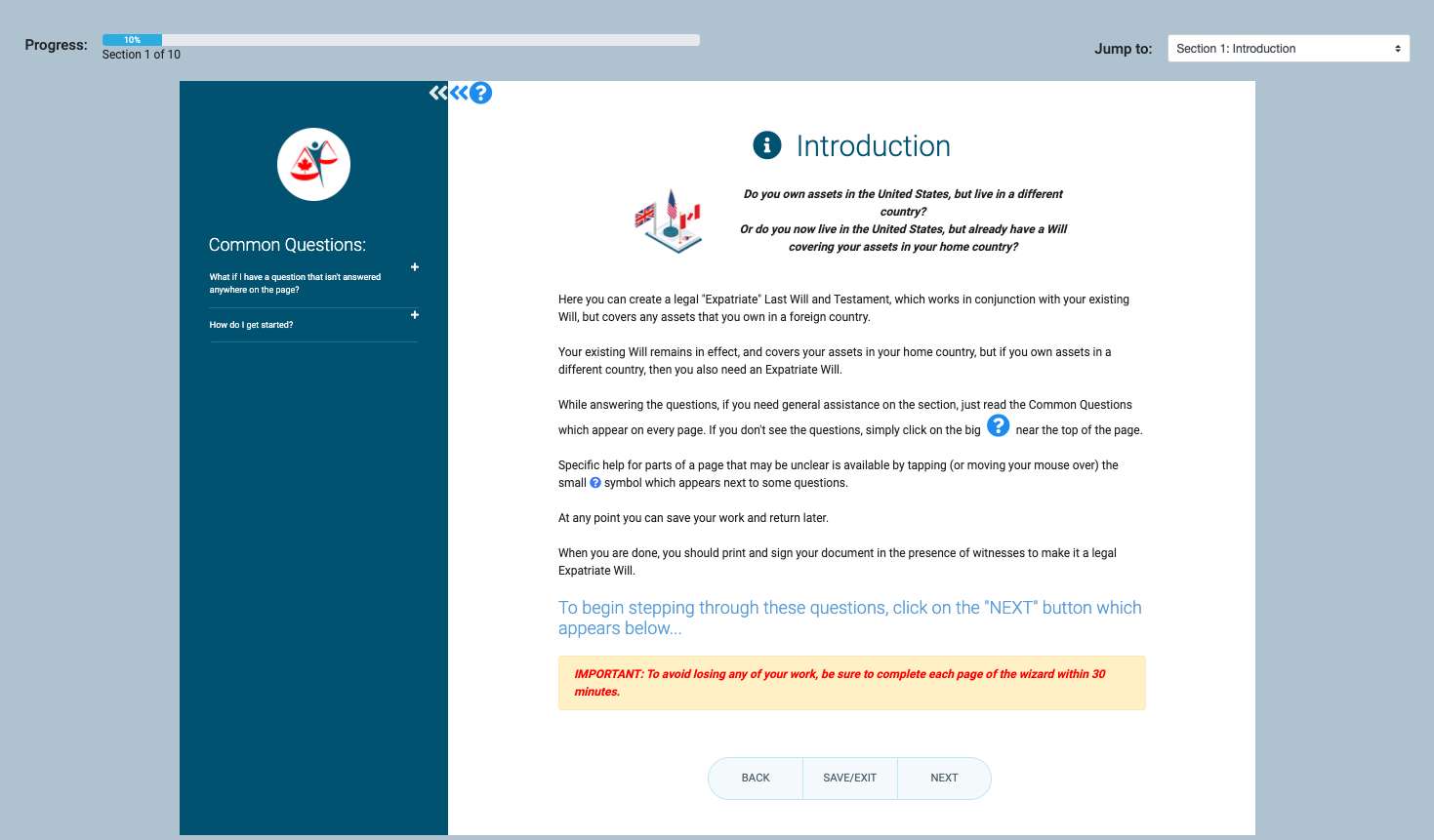
The Expat Will service from LegalWills addresses all of these challenges. Here is how it works:
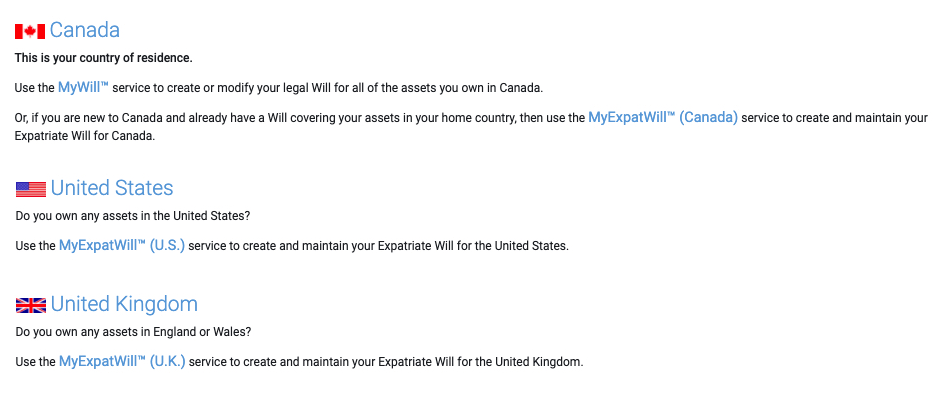
- Select the countries where you hold assets. The service currently supports Wills for Canada, the United States, the United Kingdom, and several other jurisdictions.
- Create a separate Will for each jurisdiction. Each Will contains its own content which follows the specific inheritance rules and signature requirements of the country where it was created.
- Automatic coordination. The Wills are designed to work together. Each Will protects only the assets which exist within its country of jurisdiction without affecting Wills which exist in different jurisdictions. The revocation clause in each Will is carefully limited.
- Print, sign, and witness according to local requirements. The service provides jurisdiction-specific signing instructions, as witness requirements may differ between countries.
Do the Wills Need to Reference Each Other?
Yes, and this is one of the most important technical aspects of multi-jurisdiction estate planning. Each Will should:
- Clearly define its geographic scope: “This Will covers all assets located in [country]”
- Limit its revocation clause: “I revoke all previous Wills and codicils relating to assets in [country]”, not “I revoke all previous Wills” without limitation
- Acknowledge the existence of other Wills: Reference the fact that other Wills exist for assets in other jurisdictions
The Expat Will service handles this coordination automatically, eliminating the risk of one Will inadvertently revoking another.
Who Needs an Expat Will?
The Expat Will is essential for several groups of Canadians:
| Group | Common Scenario |
|---|---|
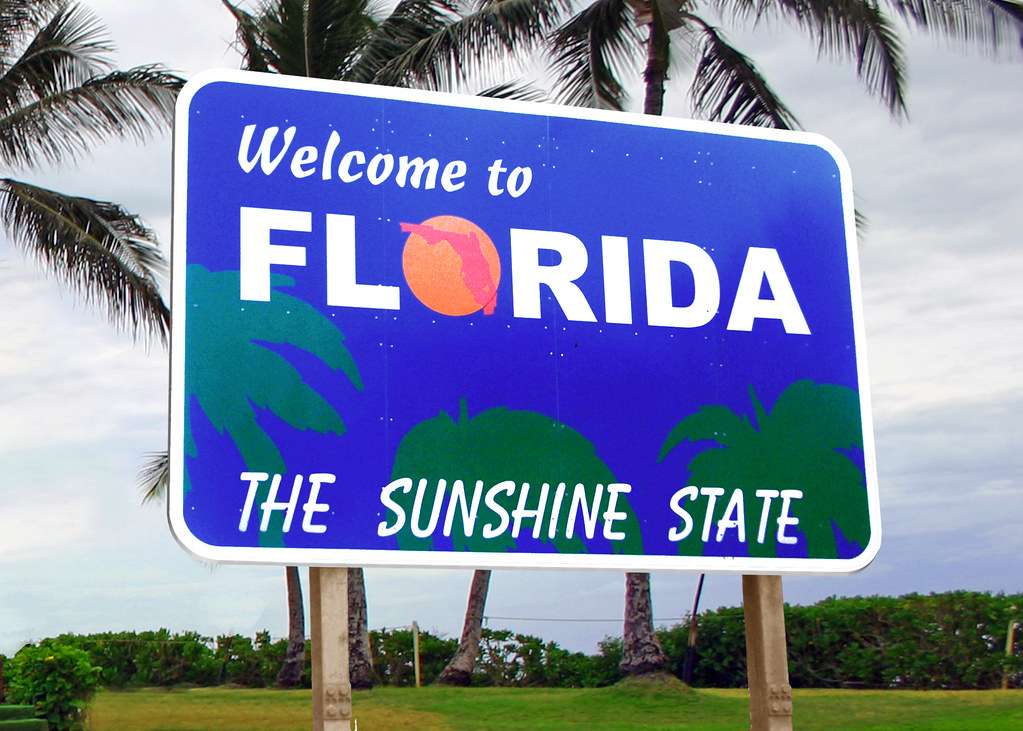
| Canadian snowbirds | Own vacation property in Florida, Arizona, or other US states |
| Immigrants to Canada | Retain property or bank accounts in their country of origin |
| Canadians working abroad | Have employment-related assets (pensions, stock options, bank accounts) in the country where they work |
| International investors | Hold real estate, brokerage accounts, or business interests in foreign countries |
| Dual citizens | Have ties (and often assets) in both countries of citizenship |
What About Power of Attorney for Foreign Assets?

A single Will which covers foreign assets does not exist and Canadian Powers of Attorney fail to receive recognition when they cross international borders. Your Canadian Power of Attorney will not allow your attorney to handle your US bank accounts and UK property sales and foreign investment access when you become unable to make decisions.
Consider preparing jurisdiction-specific Powers of Attorney for any country where you hold significant assets. The document allows you to designate someone you trust to take care of your assets when you become unable to handle them.
Frequently Asked Questions
Can my Canadian Will cover US property?
Technically, a Canadian Will can be probated in the US to cover US assets, but the process is slow, expensive, and complicated. A separate US Will drafted under the relevant state’s laws is far more efficient and avoids potential conflicts with US succession and tax law.
What if I own property in a country not covered by the Expat Will service?
You should consult a lawyer in that country to prepare a jurisdiction-specific Will. Ensure that any foreign Will is coordinated with your Canadian Will, specifically, that the revocation clauses do not conflict. The questions to ask an estate planning lawyer can help guide that conversation.
Do I need to update all my Wills at the same time?
Review all Wills together because this method represents best practice for making changes. Your Canadian Will update which changes your executor will affect how your foreign Wills function. All international bodies need to synchronize their operational changes.
What happens to foreign assets if I die without a foreign Will?
The foreign country’s intestacy laws will apply to assets located there. These laws may be very different from Canadian intestacy rules. For example, some US states have community property rules, and some European countries have forced heirship. The distribution of assets becomes uncontrollable when someone dies without creating a local Will.
How much does the Expat Will service cost?
The Expat Will service from LegalWills provides worldwide coverage at prices which remain lower than what lawyers would charge for each international jurisdiction. Visit LegalWills.ca for current pricing and available jurisdictions.

Tim Hewson is one of the founders of LegalWills.ca.
He has over 20 years of experience helping people to write their Will and other estate planning documents. He has been interviewed by many of the major news media outlets including CTV, Global News, The Toronto Star, and other leading Canadian publications. He has also contributed to a number of financial planning books.
Throughout his career, Tim has written extensively on the subject of Will writing and estate planning.